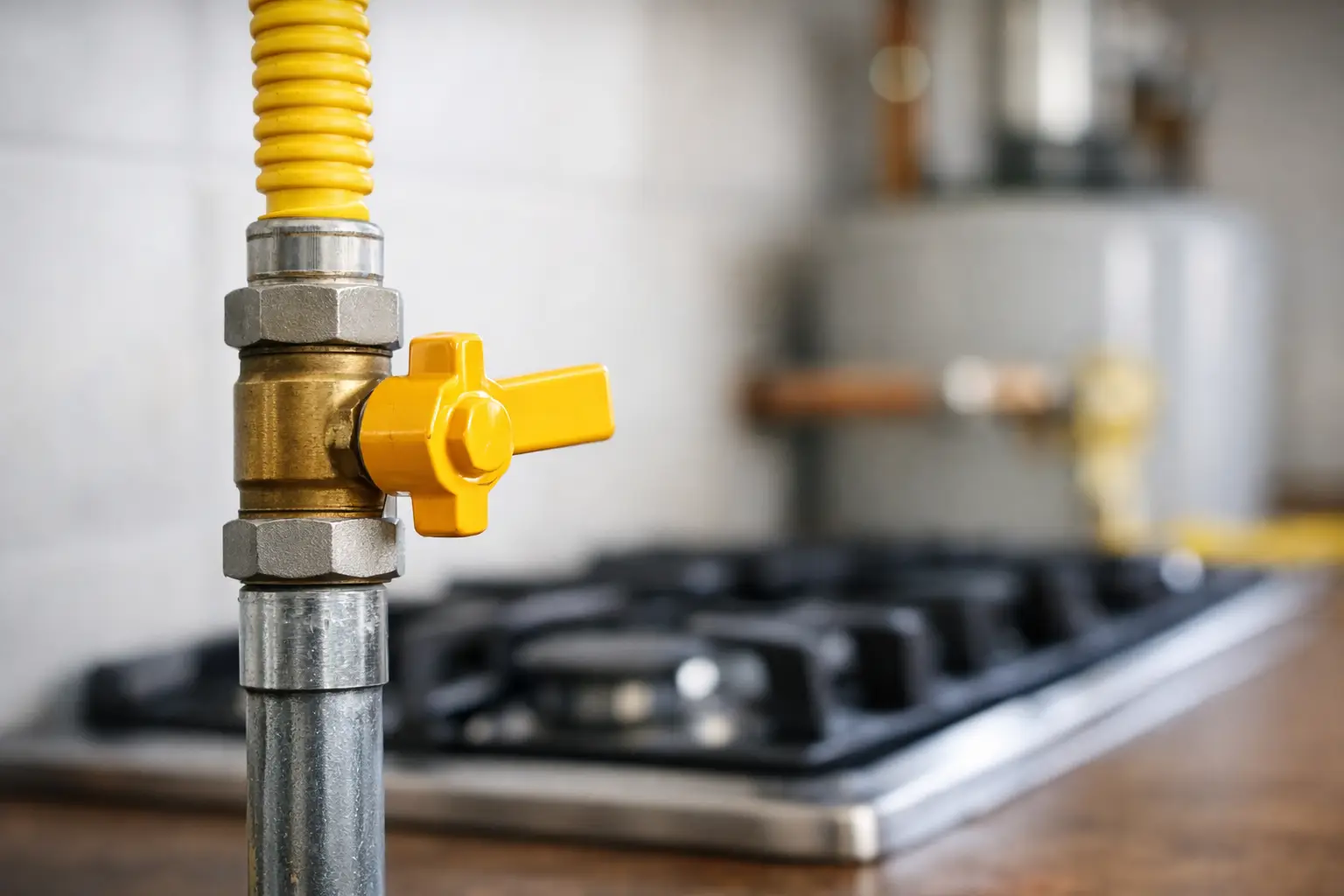
Use this gas shutoff valve guide to recognize common valves, respond safely to a suspected leak, and know when to call a licensed gas professional promptly.
A gas shutoff valve is easy to overlook until an appliance is being replaced, a gas odor appears, or work is planned near a fuel line. This gas shutoff valve guide helps Miami-area property owners and managers understand what these valves do, where they may be located, and when a qualified gas professional should take over.
Natural gas systems are dependable when they are installed correctly and maintained with safety in mind. The shutoff valve is a small but critical part of that system. It gives authorized users and trained professionals a way to stop gas flow to a specific appliance or, in some cases, to the property.
A gas shutoff valve controls the flow of natural gas through a pipe. In the open position, gas can reach an appliance such as a range, dryer, water heater, pool heater, generator, or commercial cooking equipment. In the closed position, it stops gas from moving past that point.
That function matters for more than emergencies. A properly located, accessible valve supports safe appliance service, replacement, inspection, and system changes. It also helps create a clear boundary between an appliance issue and a larger gas piping concern.
Not every valve controls the same portion of the system. One valve may serve a single appliance, while another may affect an entire building or meter connection. Knowing the difference can prevent confusion when a fast, informed response is needed.
Most homes and businesses have more than one point where gas flow can be controlled. Their exact locations vary by building layout, appliance type, utility setup, and local code requirements.
An appliance shutoff valve is typically installed on the gas supply line close to the appliance it serves. You may find one behind a gas range, near a dryer, beside a water heater, or at commercial kitchen equipment. Its purpose is to isolate that appliance without interrupting gas service to the rest of the property.
Accessibility is a key consideration. A valve hidden behind permanent finishes, blocked by stored materials, or difficult to reach during service can create a safety and compliance concern. In commercial settings, equipment changes and tenant improvements can make this especially relevant.
A main shutoff valve controls gas service to a much larger portion of the property. It may be located near the gas meter, where the gas line enters the building, or at another designated point in the system. Utility-owned equipment and customer-owned piping are not always the same thing, so the appropriate party to operate or service a valve depends on its location and ownership.
For larger commercial properties, there may be multiple gas zones, branch lines, and equipment-specific controls. Property managers should keep accurate information about which valves serve which areas, particularly when managing restaurants, multifamily buildings, laundry facilities, or properties with pool and backup-power equipment.
Outdoor gas appliances may have dedicated valves for pool heaters, generators, fire features, or outdoor kitchens. South Florida weather, landscaping, corrosion, and exterior renovations can affect how visible and accessible these components remain over time.
A valve that is exposed to the elements should not be ignored simply because it is outdoors. Signs of corrosion, physical damage, an unreadable label, or a valve that is difficult to access deserve professional attention before they become a bigger problem.
Gas valves are often installed on rigid metal piping or approved flexible appliance connectors. Many have a lever-style handle, though handle styles can vary. On a common quarter-turn valve, a handle aligned with the pipe often indicates an open position, while a handle positioned across the pipe often indicates a closed position.
That visual rule is helpful, but it is not a substitute for professional verification. Valve designs, piping configurations, and past alterations can make assumptions risky. Do not force a handle, disassemble a connection, or attempt to determine a problem by testing for gas yourself.
If you recently moved into a property, took over building operations, or completed a renovation, ask a licensed gas professional to identify the relevant shutoff locations and explain which equipment they serve. Clear identification is more useful than trying to remember a valve location during an urgent situation.
A suspected gas leak is not a troubleshooting project. The safest response is to move people away from the area and avoid anything that could create a spark or flame. Do not operate electrical switches, use electronic devices near the suspected leak, light a match, smoke, or start a vehicle nearby.
If it can be done without entering a hazardous area or taking unnecessary risks, a known and accessible shutoff valve may be used to stop the gas supply. If you are unsure which valve to use, cannot reach it safely, or notice a strong odor, leave the property and contact emergency services and the gas utility from a safe location.
Do not return to the building because the odor seems to fade. Natural gas odor can vary with ventilation and location. The area should be assessed by the appropriate emergency responders, utility personnel, or qualified gas professionals before normal use resumes.
A valve can look ordinary while still creating a service or safety issue. A licensed gas professional should inspect the system when a valve is leaking, corroded, damaged, inaccessible, improperly supported, or difficult to operate. The same applies when an appliance is being added, relocated, replaced, or removed.
This is particularly important when converting equipment, extending a gas line, or planning a remodel. A new range location, upgraded water heater, generator installation, or commercial kitchen revision may require changes beyond the visible appliance connection. Proper pipe sizing, permitted materials, pressure testing, ventilation requirements, and code compliance all affect the finished installation.
For commercial operators, a gas interruption can affect more than one piece of equipment. Coordinated planning helps protect employees, tenants, customers, and business operations. It also reduces the chance that an appliance installation reveals an unaddressed issue in older piping.
You do not need to handle gas piping to be prepared. A few practical property-management habits can make a meaningful difference. Keep appliance areas reasonably clear, avoid covering gas valves with cabinets or built-ins, and make sure staff or household decision-makers know who to call for gas service concerns.
For businesses, maintain current records of gas-fired equipment and the areas each valve serves. When a tenant changes equipment or a contractor modifies a space, have the gas system reviewed as part of the project rather than treating it as an afterthought. Labels can be useful when they are accurate, durable, and applied by someone familiar with the system.
Homeowners should also mention any past gas work when scheduling service. A professional can better assess the system when they know about additions such as outdoor kitchens, pool heaters, generators, or prior appliance relocations.
The purpose of a gas shutoff valve is simple, but the system around it is not always simple. Gas piping must be properly installed, protected, tested, and matched to the appliances it serves. A valve that is in the wrong place, hard to reach, or not appropriate for the application can undermine an otherwise useful safety feature.
Prestige Gas Services Corp helps residential and commercial customers with dependable natural gas service, installation support, and professional guidance in Miami and surrounding communities. Whether you need a valve location evaluated, an appliance connection reviewed, or a larger gas project planned, a direct conversation with a qualified specialist can provide clarity before work begins.
When questions arise about a gas valve, treat uncertainty as a reason to call for professional help, not a reason to take chances. Clear access, correct installation, and a prompt response to warning signs help keep your property ready for the moments when reliable gas service matters most.
In this article
Discuss Your Gas Project
Contact Prestige Gas Services for natural gas and propane service in Miami-Dade and Broward counties. Request a free estimate.