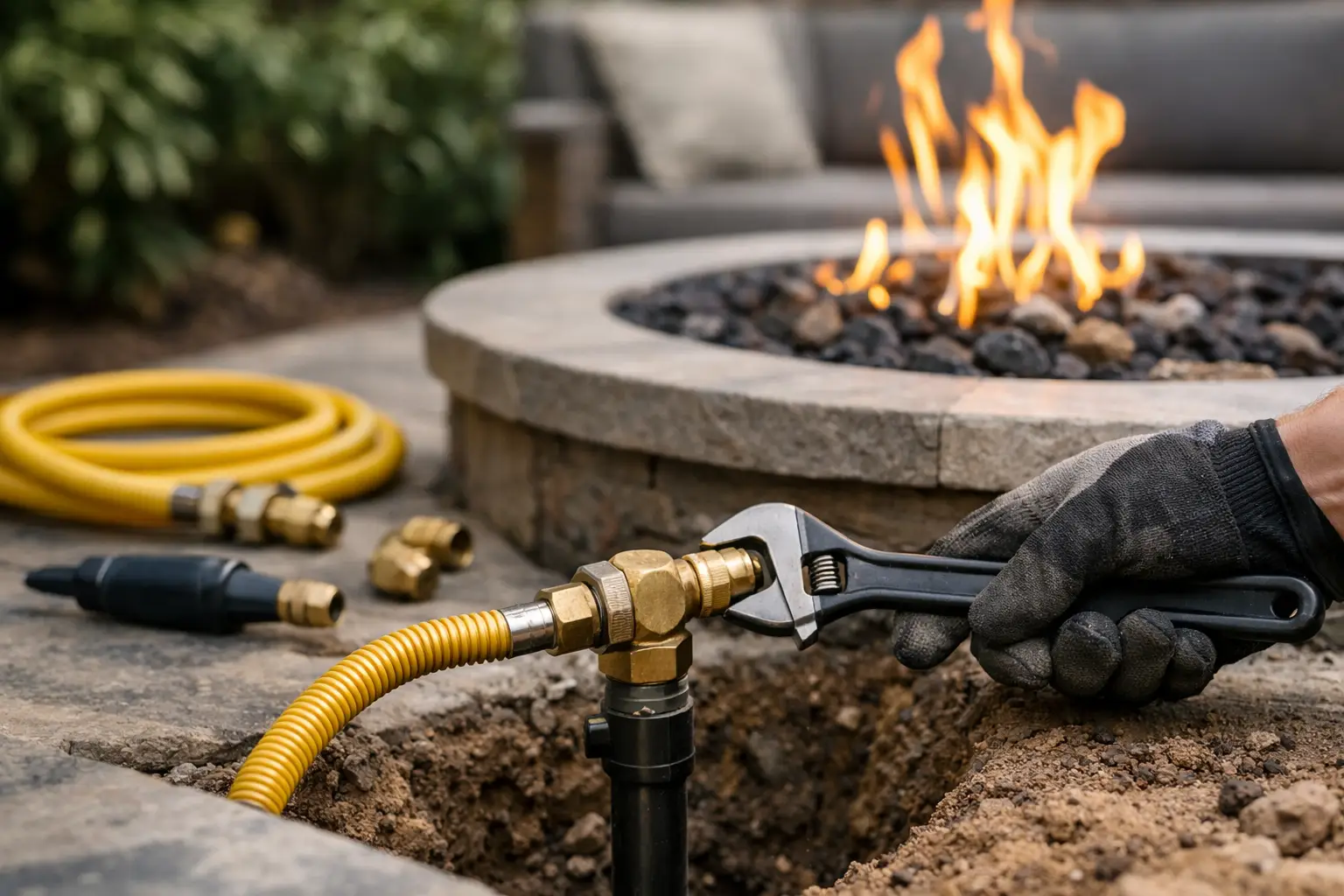
Fire pit gas line installation requires safe planning, proper sizing, and code-compliant work. Learn what matters before your project begins.
A fire feature can make a patio feel finished, but the part that matters most is the one you do not see. Fire pit gas line installation is what determines whether your setup performs reliably, lights properly, and meets safety and code requirements from day one.
For homeowners and property managers, that usually means asking the right questions early. Is the gas supply adequate? Does the line need to be upsized? Where should the shutoff be placed? Those details affect both safety and day-to-day use, and they are best handled before the patio is complete and the fire pit is in place.
A lot of people picture this as a simple connection from a gas source to the burner. In practice, there is more to it. The installation has to account for the fuel type, the total BTU demand of the fire feature, the length of the gas run, the pipe size, the location of shutoff valves, the ignition style, and local code requirements.
If the fire pit is part of a larger outdoor project, the gas line also has to work alongside the property layout. Landscaping, hardscape design, access to the meter, and clearances from structures all play a role. On commercial properties or multi-use outdoor spaces, usage patterns matter too. A feature that operates occasionally at a residence may be very different from one expected to perform regularly at a restaurant, common area, or hospitality setting.
That is why a proper gas installation is less about attaching components and more about planning a system that works safely and consistently.
One of the most common project issues is timing. A fire pit often gets selected after pavers, concrete, seating walls, or landscaping are already underway. At that point, routing the gas line can become more complicated than it needed to be.
When the gas line is planned early, the work is cleaner and more efficient. The installer can determine the best route, confirm the right pipe sizing, and coordinate placement so the finished outdoor area looks intentional instead of modified after the fact. It also reduces the chances of rework, avoidable delays, or design compromises.
This matters in South Florida properties where outdoor living spaces are used year-round. A well-planned fire pit should feel integrated into the space, not added as an afterthought.
The biggest factor is fuel demand. Fire features vary widely in output, and the gas line must be sized to deliver enough fuel at the required pressure. If the line is undersized, the flame may be weak or inconsistent. If the project includes other gas appliances, the system must be evaluated as a whole rather than as a single fixture.
Distance also matters. A longer run from the gas source can require different sizing than a short, direct connection. The same fire pit can need a different installation approach depending on where it sits on the property.
Material selection is another part of the conversation. The type of piping used depends on the application, code requirements, and site conditions. Outdoor exposure, routing, and access all influence what makes sense.
Then there is equipment compatibility. The burner, valve components, ignition system, and gas supply need to work together as intended. A mismatch between listed components and field conditions can create avoidable performance problems.
Gas work is not the place for guesswork. A fire pit introduces open flame into an outdoor living area, which makes safe installation essential. That includes proper shutoff access, secure connections, pressure considerations, ventilation awareness, and attention to manufacturer specifications.
Clearances are especially important. The fire pit location has to be suitable for flame use near seating, structures, overhangs, and other outdoor features. Even when a design looks good on paper, the actual site conditions may require adjustments.
Inspection and testing are also part of professional gas work. Before a line is put into service, it needs to be checked for integrity and proper operation. That step protects the property owner and helps confirm the installation is ready for reliable use.
For many customers, safety is the main reason to work with a dedicated gas specialist instead of a general contractor handling it as one small part of a larger build. That concern is valid. Gas systems deserve focused attention.
It depends on the property and how the fire pit will be used. Natural gas is often preferred when a permanent gas source is available because it supports a more convenient, built-in setup. There is no tank swapping, and the fire feature can become a consistent part of the outdoor space.
Propane may make sense in cases where natural gas is not available or where the design calls for a different layout. But from an installation standpoint, the decision should be made early. The fuel type affects the equipment, supply setup, and overall planning.
For customers already using natural gas for other appliances, extending service to an outdoor fire pit may be the most practical long-term solution, provided the system can support the additional load.
A good installation process starts with a site review and a clear discussion of the intended fire feature. The installer needs to know where the fire pit will sit, what model or burner specification is being used, and whether the property already has an existing gas system that can support it.
From there, the job is typically evaluated for routing, sizing, connection requirements, and compliance. If permits or inspections are required, that should be addressed as part of the project planning, not left as a surprise later.
During the work itself, the goal is straightforward: create a safe, code-compliant gas connection that supports proper performance and fits the finished outdoor space. Once installed, the system should be tested and confirmed before use.
For the customer, the real value is clarity. You should know what is being installed, why it is being done that way, and what to expect when the project is complete.
A backyard fire pit for a single-family home usually centers on comfort, aesthetics, and reliable operation. The line still has to be installed correctly, but the usage pattern may be relatively simple.
Commercial settings can add another layer. Outdoor amenity spaces, hospitality environments, and shared property features often demand more coordination. There may be stricter operational expectations, additional liability considerations, and other gas equipment on site competing for system capacity.
That is why it helps to work with a company that understands both residential and commercial gas applications. The technical standards remain serious in either setting, but the planning process may look different depending on how the space will be used.
When hiring for fire pit gas line installation, experience in gas work should be the priority. This is a specialized service, and customers should feel comfortable asking how the line will be sized, how the installation will be tested, and how code compliance will be handled.
Communication matters just as much. A dependable contractor should be able to explain the process in plain language and identify any site limitations before work begins. That helps avoid confusion and builds confidence in the finished result.
In Miami and surrounding areas, outdoor gas features are a common part of modern property upgrades, but climate and local conditions do not reduce the need for proper installation. If anything, year-round outdoor use makes reliability even more important.
Prestige Gas Services Corp works with property owners who want that work done safely and correctly, with direct communication and practical guidance from start to finish.
Once the installation is complete, the best outcome is simple. The fire feature lights as intended, performs consistently, and feels like a natural part of the property. No second-guessing, no workarounds, and no lingering concerns about whether the gas line was done right.
That peace of mind starts long before the first flame. It starts with careful planning, qualified gas work, and a clear focus on safety. If you are considering an outdoor fire feature, taking the gas line seriously is what turns a good design into a dependable one.
In this article
Discuss Your Gas Project
Contact Prestige Gas Services for natural gas and propane service in Miami-Dade and Broward counties. Request a free estimate.