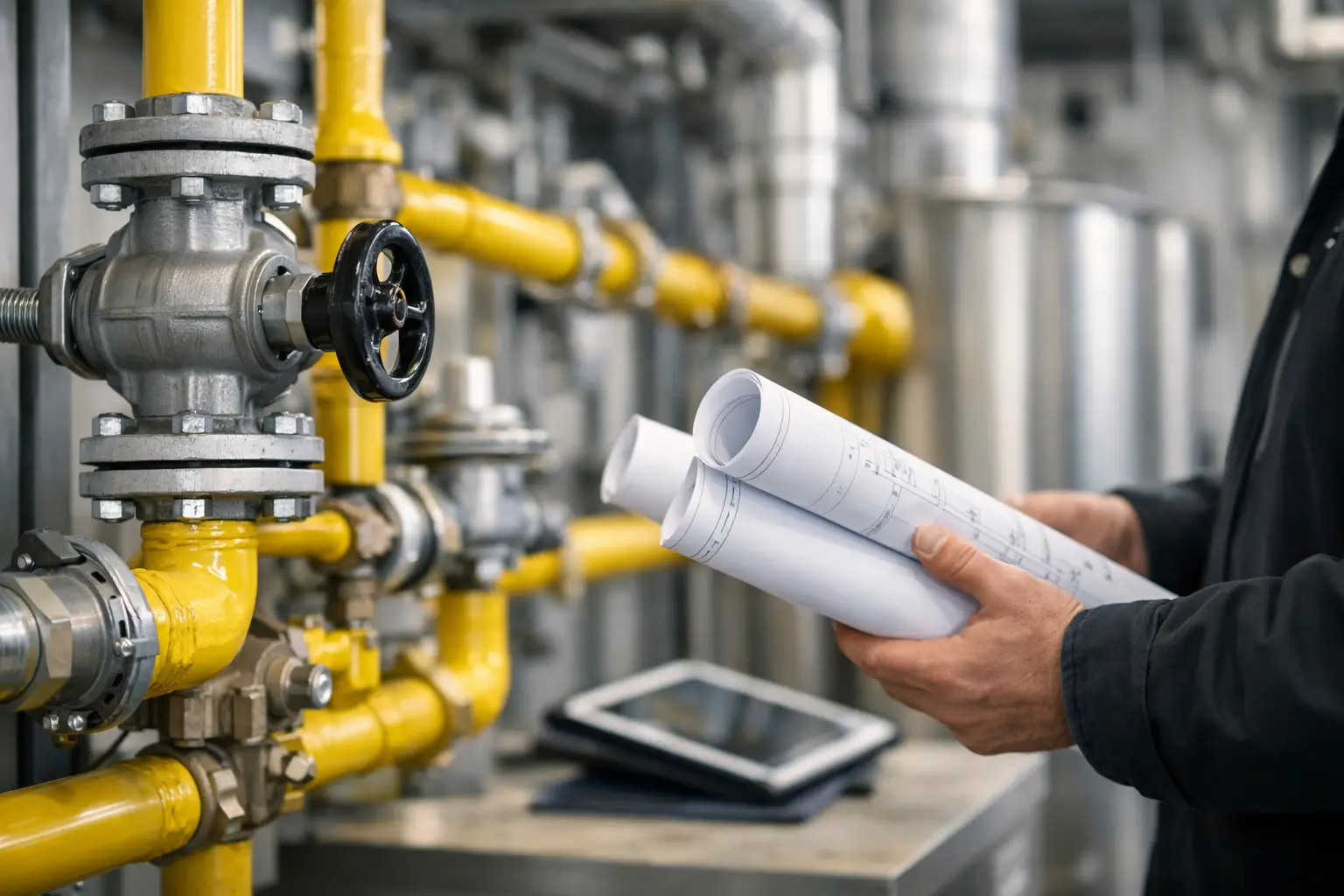
A commercial gas piping guide for owners and managers who need safe planning, code-compliant installation, and reliable gas service.
A restaurant buildout stalls, a water heater upgrade gets delayed, or a generator project cannot move forward because the gas piping plan was treated like a minor detail. In commercial properties, gas piping is not a background item. A solid commercial gas piping guide starts with that reality: the piping system affects safety, equipment performance, inspections, scheduling, and long-term reliability.
For business owners, property managers, and facility teams, the goal is usually simple. You want gas service that is safe, code-compliant, and dependable without chasing answers from multiple contractors. That means understanding what goes into a commercial gas piping project before installation begins, where problems usually appear, and why experienced gas specialists matter from the first conversation.
Many people hear “gas piping” and think only about the pipe itself. In a commercial setting, the scope is wider. The system has to match the building’s use, the connected equipment, the utility supply, the code requirements, and the physical layout of the property.
That is why a useful commercial gas piping guide should address the full path of the project. It starts with the fuel demand of the equipment. It continues through routing, pipe sizing, material selection, ventilation considerations, shutoff access, and inspection readiness. It also has to account for how the space will operate day to day, because a technically correct installation can still create service headaches if the design ignores maintenance access or future expansion.
This is where commercial work differs from a simple residential appliance connection. A retail plaza, restaurant, multifamily property, warehouse, or mixed-use building can have more equipment, longer runs, more coordination with other trades, and tighter code oversight. The margin for error is smaller, and the consequences of a bad decision are bigger.
One of the most common mistakes in commercial planning is focusing on where the pipe will run before confirming what the system must support. Every connected appliance or piece of equipment contributes to the total gas load. That includes rooftop units, commercial ranges, boilers, water heaters, dryers, generators, and other gas-fired systems.
If the total demand is underestimated, the system may not deliver enough gas volume where it is needed. Equipment can perform poorly, fail to ignite correctly, or operate inefficiently. If the system is oversized without a clear reason, you may add unnecessary complexity and coordination issues. Proper sizing is not guesswork. It comes from the actual equipment requirements, the length of the run, and the design conditions that apply to the installation.
In practical terms, this means gas piping should be planned alongside equipment decisions, not after them. If appliances change late in the project, the gas design may need to change too. That can affect permitting, scheduling, and the inspection timeline.
In commercial spaces, the physical routing of gas piping affects both safety and serviceability. Pipes may need to pass through utility areas, mechanical rooms, exterior walls, roof zones, or tenant spaces. Every routing decision should consider access, protection, support, and code compliance.
A clean layout reduces future problems. If shutoffs are hard to reach, future service becomes more difficult. If piping is routed through vulnerable areas without proper protection, damage risk goes up. If the run is needlessly complex, installation takes longer and testing can become more involved.
Material selection also depends on the building and the application. There is no one-size-fits-all answer for every commercial property. The right choice depends on the environment, local requirements, system design, and what the installation needs to support over time. What works well in one type of building may not be the best fit in another.
This is one reason experienced commercial gas contractors ask detailed questions early. They are not complicating the job. They are trying to prevent design choices that look fine on paper but create issues once the system is in service.
Commercial gas work has to be approached with code compliance from the beginning. Waiting until the end to think about inspections usually creates delays. If a system is installed without the right planning, corrections can affect finished walls, ceilings, equipment placement, and project schedules.
Compliance is not limited to the pipe network itself. It may involve appliance clearances, combustion air, venting relationships, shutoff placement, regulator requirements, testing procedures, and coordination with utility expectations. Depending on the property, there may also be local permitting steps and documentation requirements that need attention before work begins.
For owners and managers, this is where specialized gas service becomes especially valuable. A contractor who regularly handles natural gas installations understands that passing inspection is not a side task. It is built into how the work is planned, installed, and tested.
Most commercial gas delays are preventable, but they usually start with assumptions. Sometimes equipment selections are incomplete. Sometimes building plans do not reflect the final use of the space. In other cases, the gas service capacity is not confirmed early enough.
Coordination is another frequent issue. Gas piping often intersects with HVAC, plumbing, electrical, framing, and fire protection work. If nobody is managing those relationships, rework becomes more likely. A small conflict in one area can force layout changes somewhere else.
Access can also become a problem. In occupied commercial buildings, work may need to be staged around business hours, tenant needs, or limited shutoff windows. That does not make the job impossible, but it does change how the project should be organized. A good plan accounts for operating conditions instead of treating the property like an empty shell.
In South Florida, environmental conditions can add another layer of consideration depending on the building type and installation location. Exterior exposure, site logistics, and property configuration may influence how the piping system is routed and protected.
This kind of planning is especially useful for people making property decisions without wanting to become gas experts. That includes business owners opening a new space, property managers coordinating tenant improvements, and commercial owners upgrading older systems.
If you are adding equipment, converting a space to a higher-demand use, replacing aging gas components, or planning a service expansion, you need more than a basic installation checklist. You need a clear understanding of what the building requires and what the work will involve.
That is why a commercial gas piping guide is less about technical theory and more about asking the right questions early. What equipment is being served? Is the load confirmed? Has routing been reviewed for safety and access? Are the permitting and inspection steps clear? Is the contractor focused specifically on gas work, or is gas just one item on a longer list of unrelated services?
Commercial gas projects call for a specialist mindset. Safety, reliability, and code compliance are not extras in this field. They are the core of the job.
When evaluating a provider, look for clear communication and a direct approach to scope, planning, and safety. You want a company that can explain the process in plain language, identify possible issues before they become delays, and handle the work with the seriousness gas systems require.
It also helps to work with a local team that understands the conditions and service expectations in the Miami area. Commercial properties do not benefit from vague timelines or hard-to-reach contractors. They benefit from responsive support, straightforward answers, and a provider that treats the project like critical infrastructure, because that is exactly what it is.
Prestige Gas Services Corp works with property owners and businesses that need that kind of focused support. For commercial gas piping, the right first step is a real project conversation – not a rough guess, not a rushed answer, and not a generic plumbing approach.
The best commercial gas piping projects feel uneventful once they are complete. Equipment operates as expected, inspections move forward, and the property has a safe, reliable system built for its actual needs. That kind of result usually comes from good planning long before the first section of pipe is installed.
If your property is preparing for a new gas installation, equipment upgrade, or commercial improvement, take the time to get the gas piping plan right at the start. A careful approach now is what keeps the project safer, smoother, and easier to rely on later.
In this article
Discuss Your Gas Project
Contact Prestige Gas Services for natural gas and propane service in Miami-Dade and Broward counties. Request a free estimate.