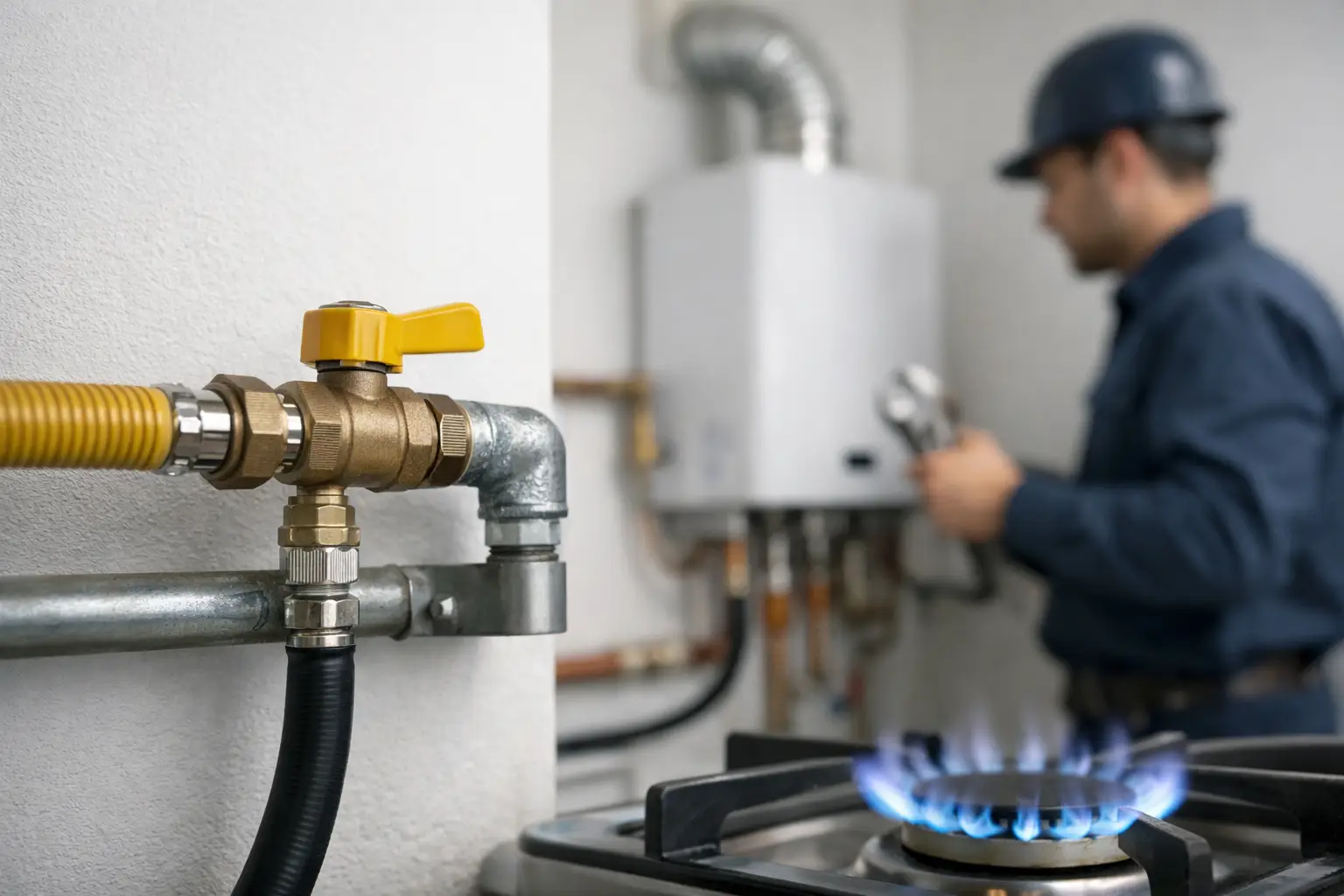
A practical guide to code compliant gas installations, covering permits, sizing, ventilation, testing, and inspection steps for safe service.
A gas line project can look simple on paper – connect the appliance, run the line, turn on the service. In practice, a guide to code compliant gas installations starts somewhere else: safety, permitting, equipment compatibility, and the quality of the work behind the walls. That is what protects your property, your occupants, and your long-term reliability.
For homeowners and property managers, code compliance is not paperwork for its own sake. It is the standard that helps prevent leaks, combustion hazards, service interruptions, and failed inspections. For commercial spaces, it also affects project timelines, tenant readiness, and liability. When gas work is handled correctly from the beginning, the system is safer, easier to inspect, and more dependable over time.
Code-compliant gas installation work means the full system meets the applicable requirements for design, materials, installation methods, testing, and approval. That includes the visible parts, such as appliance shutoff valves and connector placement, but it also includes details many property owners never see, such as pipe sizing, support spacing, sediment traps where required, regulator selection, combustion air, and pressure testing.
This is why two installations can look similar at a glance but differ significantly in quality. One may pass inspection and perform consistently. The other may create recurring issues because the line was undersized, the venting was not addressed properly, or the appliance was connected without considering total gas demand.
A code-compliant result is not just about getting a sticker from an inspector. It is about making sure the installation works safely under real conditions, not just on the day it is turned on.
The most common mistakes in gas projects happen before any pipe is installed. A proper plan looks at the full scope of the job, not just the single appliance being added. If a property is installing a generator, range, water heater, pool heater, or commercial cooking equipment, the available gas supply has to support that load. If it does not, the system may need resizing, a regulator adjustment, or a broader upgrade.
This is where code compliance and performance overlap. An installation can technically be connected, but if the gas demand exceeds what the line can deliver, the appliance may not operate as intended. That can lead to ignition failures, poor burner performance, nuisance shutdowns, or excessive wear.
Planning also includes confirming the appliance listing and manufacturer requirements. The code sets the minimum standard, but the manufacturer instructions matter too. If the equipment requires specific clearances, venting methods, or connector types, those details are part of a proper installation.
Many property owners worry that permits only slow a project down. In reality, they help verify that critical gas work has been reviewed and tested. A permitted installation creates a documented path from planning to inspection, and that matters when safety-sensitive systems are involved.
Requirements can vary based on the property type, municipality, and the scope of the work. In areas like Miami and surrounding South Florida communities, local conditions, construction types, and municipal review processes can influence how a project is approached. That is one reason local experience matters. The work needs to align with both general code requirements and the practical expectations of local inspection authorities.
Pipe sizing is one of the most important parts of compliant gas work. Every appliance has a BTU demand, and the system has to deliver enough gas volume at the required pressure across the full length of the run. The farther the gas has to travel and the more appliances connected to the system, the more carefully the sizing needs to be calculated.
Undersized piping does not always fail immediately. Sometimes the problem only appears when multiple appliances operate at once. A range might seem fine until the water heater fires, or a generator may struggle under load because the supply line was not designed for actual demand.
Oversizing is not usually the issue people imagine, but it is not a reason to guess. Material selection, pressure conditions, and regulator setup all affect system performance. Good installation work is based on load calculations and code-approved sizing methods, not rough estimates.
The type of piping used must be appropriate for the application and allowed by the applicable code. Just as important, the route of the piping needs to protect the line from physical damage, corrosion risks, and unnecessary stress. Penetrations, supports, clearances, and terminations all need attention.
This is where quality workmanship shows. Clean routing, secure support, proper protection, and thoughtful appliance placement help the system last longer and make future service easier. Sloppy work may still look functional at first, but it often creates inspection issues or service headaches later.
A safe gas installation is not only about the pipe. Appliances that burn gas need proper combustion conditions and, where applicable, safe venting of exhaust gases. If the installation space is too tight, if air supply is limited, or if venting is not handled correctly, the issue goes beyond compliance – it becomes a direct safety concern.
This is especially important when replacing older equipment with newer units or when remodeling enclosed spaces. A location that worked for one appliance arrangement may not be suitable for another. The answer depends on the equipment type, the room size, the building layout, and the venting design.
For commercial spaces, the stakes can be higher because equipment loads are larger and operating schedules are heavier. A code-compliant installation has to account for how the system will actually be used, not just how it appears on a floor plan.
Some of the most important code items are the ones customers rarely notice. Appliance shutoff valves need to be correctly placed and accessible. Regulators must be suited to the system and installed in the right orientation and location. Where required, sediment traps need to be included. Flexible connectors, when allowed, have to be the correct type and length for the appliance.
Then comes testing. Gas lines are typically pressure tested before final approval, and that step matters. Testing helps confirm that joints, fittings, and the full run hold pressure as required before the system is placed into service. A proper test is not a formality. It is one of the clearest indicators that the installation was taken seriously.
An inspection is essential, but it is still one point in time. Good gas work is built to perform after the inspection, during everyday use, and years into occupancy. That means thinking beyond minimum acceptance and focusing on reliability, service access, and clean execution.
For example, an appliance may technically fit in a space, but if access to shutoffs, unions, or future maintenance points is poor, the installation may create avoidable service problems later. The best results come from work that is both compliant and practical.
If you are evaluating a contractor, the right questions are usually straightforward. Do they specialize in gas work? Do they understand permitting and inspection requirements? Can they assess total system demand instead of only connecting one appliance? Do they communicate clearly about safety, scope, and next steps?
That matters because gas installations are not a place for vague answers. A dependable provider should be able to explain the process in plain language, identify what the property needs, and carry the job through from planning to final approval. For residential customers, that reduces uncertainty. For commercial clients and property managers, it reduces delays and helps keep projects moving.
Prestige Gas Services Corp approaches gas installation work with that standard in mind – clear guidance, safe execution, and dependable service for properties that need the job done correctly.
There is also a broader reason this matters. Code-compliant gas work can support insurance documentation, property transactions, renovations, and future equipment changes. If an installation was done without proper planning or approval, the problem often resurfaces later, when a tenant improvement is underway, when a property is sold, or when a new appliance is added to an already strained system.
Doing it right the first time usually creates fewer interruptions and fewer surprises. That does not mean every project is identical. Some properties need only a straightforward appliance connection, while others need system upgrades, revised pipe sizing, or coordination with other trades. The right approach depends on the building, the equipment, and the intended use.
If you are planning a gas installation, the safest path is to treat compliance as part of performance, not a separate box to check. A properly designed, tested, and inspected system gives you something more valuable than a completed project – it gives you confidence every time that gas service is in use.
In this article
Discuss Your Gas Project
Contact Prestige Gas Services for natural gas and propane service in Miami-Dade and Broward counties. Request a free estimate.