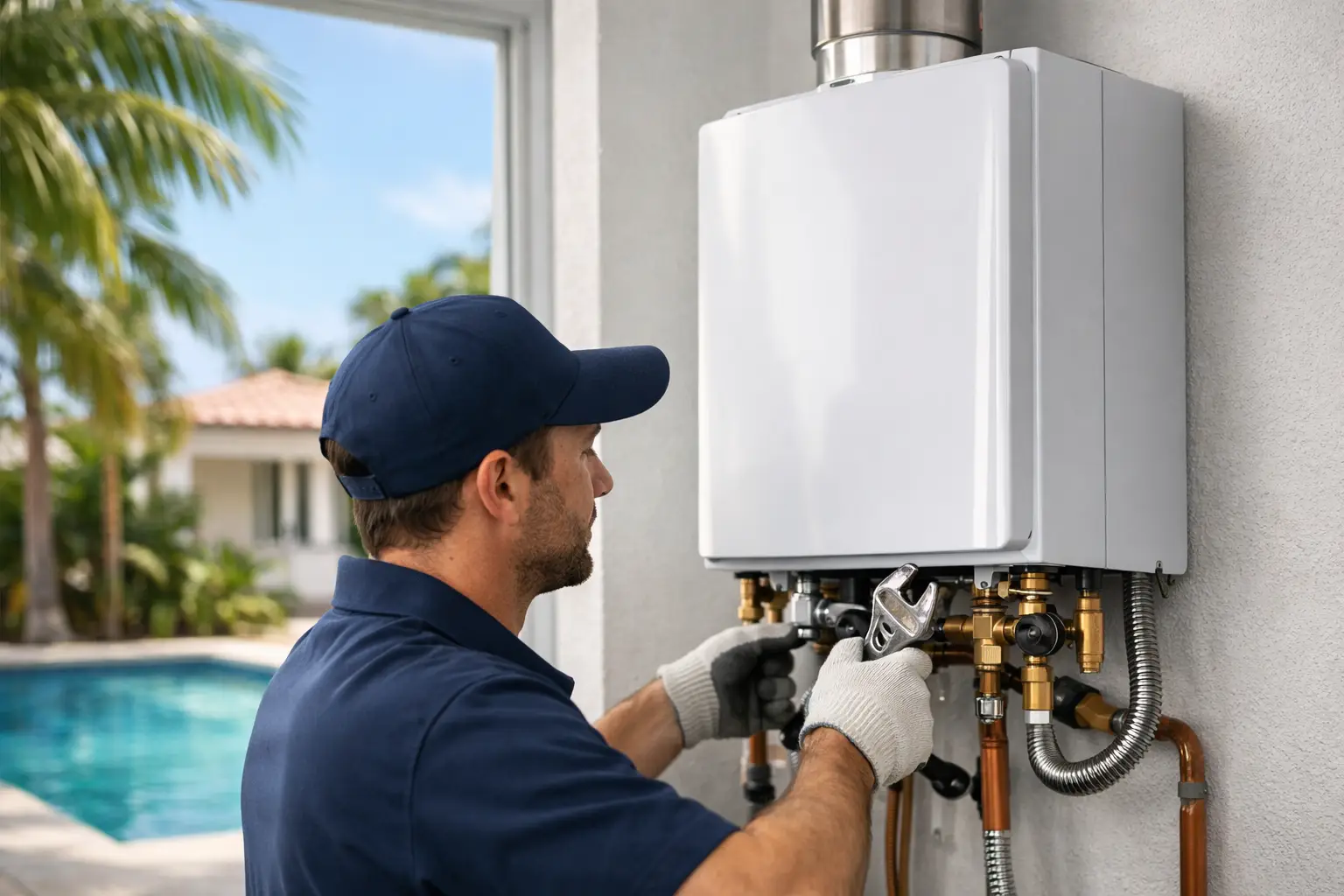
Need tankless water heater installation Miami property owners can trust? Get safe, code-compliant gas service for reliable hot water.
When hot water runs out in the middle of a busy morning, the problem is not just comfort. For many Miami homeowners and property managers, it is a sign that the current system no longer fits the property. Tankless water heater installation Miami customers request most often comes down to one goal – dependable hot water without the bulk and limitations of a traditional tank.
A tankless system can be a smart upgrade, but only when the installation is handled correctly. Gas line capacity, venting, appliance sizing, and code compliance all matter. In a market like Miami, where residential and commercial properties vary widely, the right setup starts with a clear assessment of the building and its hot water demand.
Tankless water heaters appeal to property owners for practical reasons. They heat water on demand, which means they do not store a full tank of heated water waiting to be used. That can help save space, reduce standby energy loss, and provide a more consistent supply of hot water when the unit is properly matched to the property.
In Miami, space can be a real concern. Utility rooms, tight mechanical areas, multifamily layouts, and commercial back-of-house spaces often benefit from equipment with a smaller footprint. For homeowners updating an older property, replacing a bulky tank with a more compact unit can create useful room while modernizing the gas system at the same time.
That said, tankless is not automatically the right answer for every building. If the system is undersized, occupants may notice reduced performance during peak demand. If the gas service or venting is not suitable, the project can become more involved. That is why installation quality matters as much as the appliance itself.
Many customers assume the job is a straightforward swap. Sometimes it is close to that, but often it is not. A gas tankless water heater has different operating requirements than a standard storage tank, and those differences need to be addressed before installation begins.
The first consideration is sizing. A professional installer will look at how many fixtures may need hot water at the same time, what kind of flow rate the building needs, and whether the system is serving a single household or a commercial operation. A small condo, a large single-family home, and a restaurant do not have the same hot water profile.
The next issue is the gas supply. Tankless units often require a different gas line configuration or greater gas delivery capacity than the old water heater. If the line is too small or the gas load has not been evaluated properly, the unit may not perform as intended. This is one of the main reasons customers should work with a qualified gas specialist rather than a general contractor guessing through the process.
Venting is another major part of the installation. Safe venting protects the building and the people inside it. The vent path, vent material, and termination points all have to meet manufacturer requirements and local code. In some properties, venting is simple. In others, layout restrictions can affect where the unit can go and what type of system makes the most sense.
The best tankless water heater installation Miami property owners can choose is one based on actual usage, not assumptions. Bigger is not always better, and smaller is not always more efficient if it cannot keep up with demand.
For a residential property, the right choice depends on bathrooms, appliances, occupancy, and usage habits. A family with multiple showers running during the morning rush needs a different solution than a smaller home with lighter demand. If the property includes luxury fixtures or high-flow applications, the system needs to reflect that.
For commercial properties, planning is even more important. Offices, salons, restaurants, and multi-unit buildings can place very different demands on hot water equipment. Downtime, inconsistent temperatures, or installation shortcuts can create bigger operational problems than many owners expect. A careful consultation helps avoid those issues before the job starts.
Gas appliances should never be treated like simple plug-and-play equipment. With tankless systems, safe installation depends on proper gas connections, pressure considerations, combustion air requirements where applicable, and approved venting methods. Every part of the job has to support reliable operation.
Code compliance is equally important. Permitting and inspection requirements exist for a reason. They help verify that gas work has been completed to the required standard and that the installation is safe for the property. This protects homeowners, tenants, businesses, and future buyers.
For customers, this should bring peace of mind. You should not have to wonder whether the gas line was sized correctly or whether the venting was improvised. You want clear answers, solid workmanship, and a system that performs the way it should.
Some tankless projects are straightforward, while others reveal conditions that need to be addressed first. Older Miami properties, for example, may have existing gas infrastructure that was never designed for a high-demand tankless appliance. In that case, gas piping upgrades may be needed before the unit can be installed safely.
Property layout can also affect the scope of work. The ideal mounting location may not offer the best vent path, or the building may have access limitations that change the installation plan. In commercial settings, scheduling around business operations may add another layer of coordination.
None of this means tankless is a bad option. It means the project should be planned properly from the start. A dependable installer will explain what the property needs, what can stay as is, and what should be updated to support long-term performance.
A professional process starts with questions, not assumptions. The installer should review the property, the hot water demand, the existing gas setup, and the physical space where the unit will be installed. From there, the recommendation should match the real needs of the building.
Good communication matters just as much as technical skill. Property owners want to know what the job involves, whether any gas line or venting modifications are needed, and what to expect during the installation. Clear answers reduce stress and help prevent surprises.
Once the work begins, the focus should stay on safe execution. That includes proper gas connections, compliant venting, secure mounting, system testing, and verification that the unit is operating correctly. The job is not complete just because the appliance turns on. It is complete when the system is installed safely and performs reliably.
Trust matters when the work involves natural gas. Whether you are upgrading a home, managing a multifamily property, or planning improvements for a commercial space, you need a contractor who understands gas service work and treats safety as the priority.
That is where a specialized company makes a difference. Prestige Gas Services Corp focuses on dependable gas solutions for residential and commercial customers who need clear guidance and code-conscious installation support. When a tankless water heater project involves gas line evaluation, venting requirements, and compliance concerns, experience in gas plumbing is not a bonus. It is part of doing the job right.
Miami properties are rarely one-size-fits-all. A house in Coral Gables may present different installation considerations than a business in Doral or a multifamily property in Hialeah. The equipment has to fit the space, the usage pattern, and the building infrastructure. A local, service-driven approach helps ensure the recommendation fits the property instead of forcing the property to fit the equipment.
If your current water heater struggles to keep up, takes up too much space, or no longer matches the needs of the property, a tankless upgrade may be worth discussing. The key is not rushing into the first unit you see. The better move is starting with a professional evaluation of the gas service, venting needs, and hot water demand.
The right installation gives you more than a new appliance. It gives you confidence that the system is set up safely, sized correctly, and built to serve your property reliably. If you are considering tankless water heater installation in Miami, the best next step is a direct conversation with a qualified gas professional who can assess the property and guide you toward the right solution.
In this article
Discuss Your Gas Project
Contact Prestige Gas Services for natural gas and propane service in Miami-Dade and Broward counties. Request a free estimate.