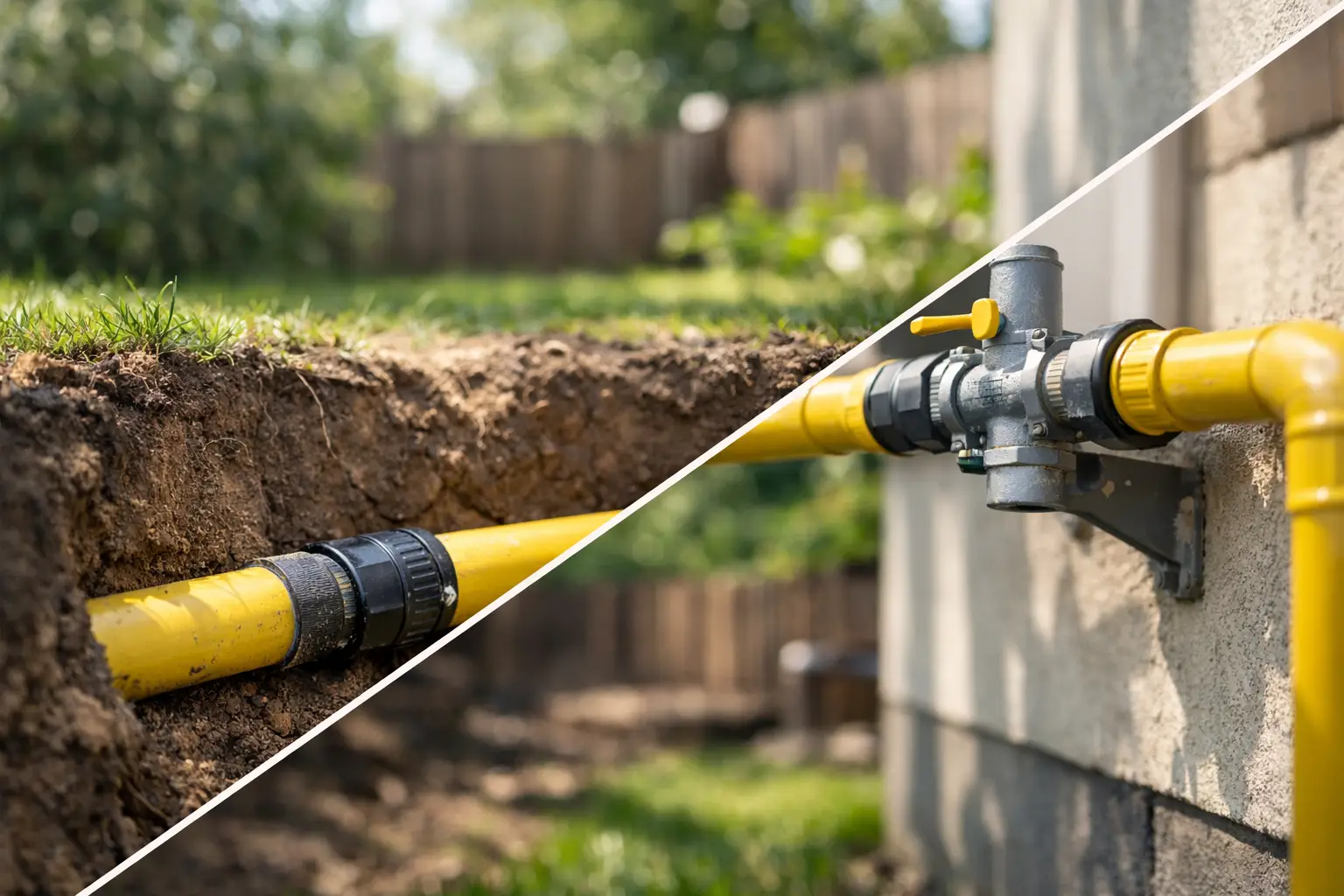
Comparing underground gas line versus above ground options for safety, access, appearance, and code needs in homes and commercial properties.
When a property needs new gas service, one of the first decisions is underground gas line versus above ground. On paper, it can seem like a simple choice about where the pipe goes. In practice, it affects safety planning, access for maintenance, property appearance, exposure to damage, and how smoothly a project moves from design to installation.
For homeowners, property managers, and business owners, the right answer usually comes down to the building layout, the equipment being served, and local code requirements. There is no one-size-fits-all setup. A gas line that works well for a restaurant patio may not be the best fit for a single-family home, and a line that makes sense in an open utility area may be a poor choice along a visible exterior wall.
The biggest difference is exposure. An underground gas line is buried below grade, while an above-ground gas line is routed where it remains visible and accessible. That single difference changes how the line is protected, inspected, and integrated into the property.
Buried gas lines are often chosen when appearance matters or when the route needs to cross a yard, driveway area, or open space without creating a visible pipe run. Above-ground lines are often selected where access is a priority and where the route can be installed in a protected, code-compliant location.
Neither option is automatically safer just because of where it sits. Safety depends on correct material selection, proper installation methods, code compliance, testing, and long-term protection from damage and corrosion.
Underground gas lines are commonly preferred when property owners want a cleaner look. If you are supplying gas to outdoor appliances, a detached structure, or equipment located away from the main building, burying the line can keep the installation less intrusive and more practical.
This approach can also reduce the chance of accidental contact from everyday activity above ground. There is no exposed piping along the side of the structure, and no visible line in areas where people walk, store equipment, or move materials.
That said, buried gas lines come with their own demands. The route must be planned carefully. Depth, material, protective measures, and marking all matter. Future landscaping or construction can become a concern if people forget where the line is located. For that reason, proper documentation and professional installation are critical from the start.
In South Florida properties, site conditions also matter. Soil conditions, drainage patterns, concrete surfaces, and existing utilities can all affect how an underground route is designed. A buried line may be the best visual solution, but it has to be the right technical solution too.
The most obvious benefit is appearance. A buried line keeps the exterior cleaner, which is especially valuable on finished homes, visible commercial frontage, and properties where aesthetics matter.
Underground routing can also create a more direct path to detached or remote equipment. If the gas needs to travel across a property, burial may avoid long exposed runs along walls or structures.
In some cases, underground placement can also help limit incidental wear from weather and human contact. But that advantage only holds if the line is installed with the right materials and protection for underground use.
The main trade-off is accessibility. Because the line is buried, inspection and repair work is less direct than with visible piping. If changes are needed later, the process may involve more effort to locate and access the line.
Underground systems also require careful coordination with other utilities and site features. Irrigation, electrical runs, drainage components, and future hardscape work all need to be considered. A rushed layout can create avoidable complications later.
Above-ground gas lines are often the practical choice when serviceability matters most. Because the piping is visible, trained professionals can inspect routing, supports, fittings, and overall condition more easily. If future modifications are expected, an exposed route may provide a more efficient long-term solution.
This can be especially useful in commercial settings, multi-equipment setups, or utility zones where straightforward access is part of responsible property management. If a line needs to serve rooftop equipment, exterior appliances, or multiple connection points, above-ground routing may offer a cleaner service strategy from a maintenance standpoint.
For some properties, above-ground installation can also simplify planning by avoiding conflicts below grade. If the underground area is crowded with existing utilities or site features, a visible route may be the safer and more practical option.
Access is the biggest advantage. Visible piping is easier to inspect, easier to trace, and often easier to modify when the property changes. That matters for both homeowners planning future improvements and commercial operators who may update equipment over time.
Above-ground lines can also reduce uncertainty during installation. The route is easier to verify visually, and coordination with existing site infrastructure may be more straightforward in certain layouts.
Another benefit is that warning signs of wear, impact, or environmental exposure may be easier to spot when the pipe is in plain view. Early detection helps support safe, reliable gas service.
The trade-off is exposure. A visible gas line may be vulnerable to impact, tampering, or environmental wear depending on where it is installed. It also affects the appearance of the building, which some property owners want to avoid.
Routing matters here. An above-ground line should never feel like an afterthought. It needs to be placed where it is protected, properly supported, and consistent with code requirements for the type of building and equipment served.
Property owners often ask which option is safer. The better question is which option can be installed safely and correctly for this specific property.
A buried line that is designed and installed properly can provide safe, reliable service for the intended application. An above-ground line that is routed, supported, and protected correctly can do the same. Problems usually come from poor planning, improper materials, code violations, corrosion issues, or physical damage that was never addressed.
That is why gas line work should begin with a clear site evaluation. The route has to make sense not only for today, but for how the property is used over time. Access paths, equipment locations, exposure risks, and future maintenance all matter.
Gas line installation is not only about preference. Code requirements, utility conditions, and property-specific constraints help determine what is allowed and what is advisable.
For example, the best routing for a residential generator line may differ from the best routing for a commercial kitchen, pool heater, or outdoor fire feature. The structure type, distance, clearance requirements, and surrounding systems all influence the final design.
In a market like Miami, where properties range from compact residential lots to busy commercial sites, site planning is rarely generic. The right gas line route should fit the building, the equipment, and the way the property actually functions.
A good decision starts with a few practical questions. Is appearance a major concern? Will the line need to cross open areas? Is easy future access important? Are there existing site conditions that make one route more workable than the other?
It also helps to think beyond installation day. A gas line should support reliable service over time, not just fit the quickest route available. Property owners are usually best served when the installation plan balances safety, compliance, accessibility, and a clean final result.
For many projects, the answer is not ideological. It is situational. One property may clearly benefit from underground routing, while another may be better served by an above-ground line that remains accessible and protected. In some cases, a project may even involve a combination of both, depending on the route and equipment locations.
If you are planning a gas installation for a home or commercial property, the smartest next step is a professional evaluation of the site, not a guess based on appearance alone. Prestige Gas Services Corp works with property owners who want safe, reliable natural gas solutions and clear guidance on what fits their layout best. The right gas line route should give you confidence long after the installation is complete.
In this article
Discuss Your Gas Project
Contact Prestige Gas Services for natural gas and propane service in Miami-Dade and Broward counties. Request a free estimate.