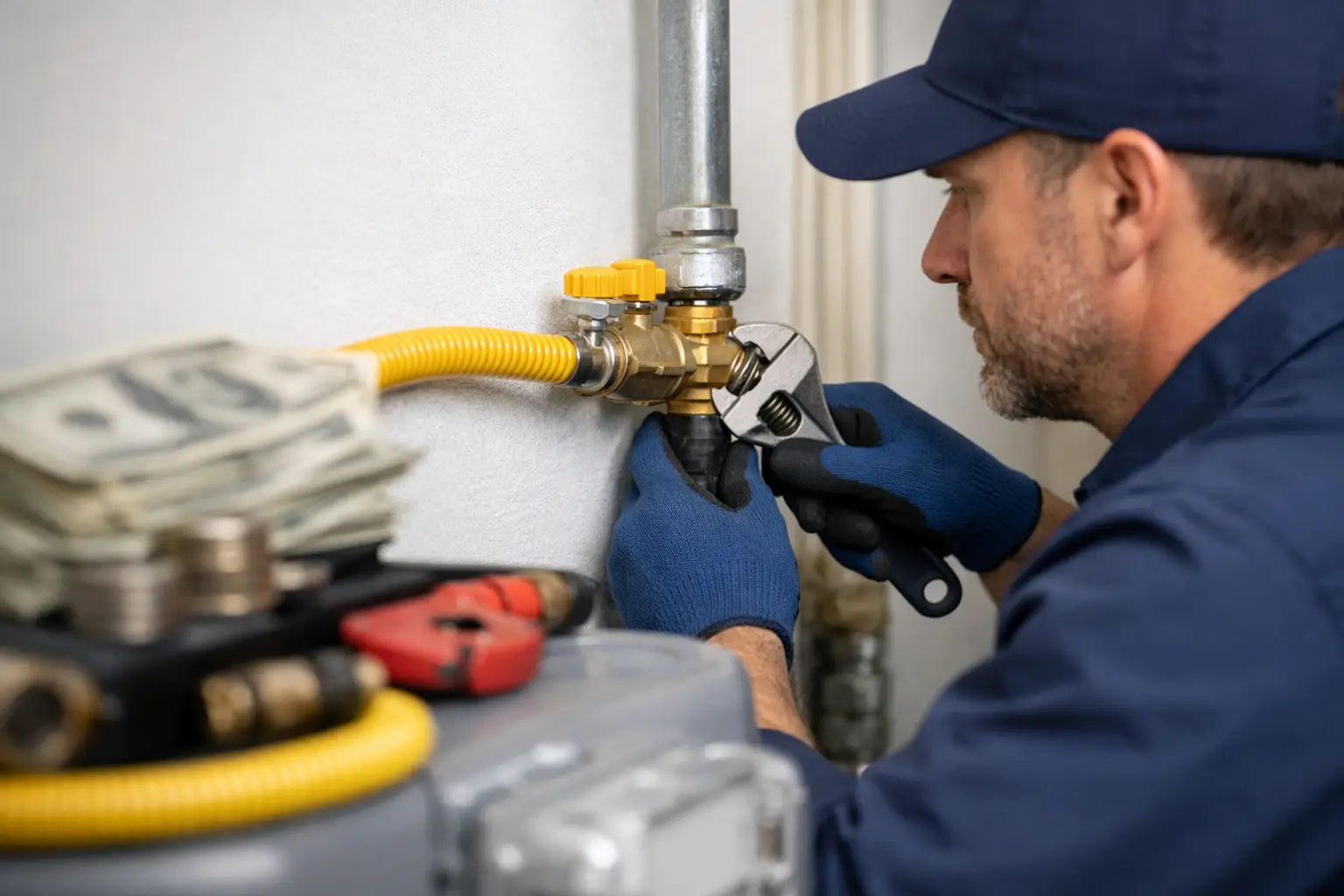
How much does a plumber charge to run a gas line? Learn what affects gas line project scope, permits, safety, materials, and installation work.
If you are asking how much does a plumber charge to run a gas line, you are probably not looking for a vague number. You want to know what actually affects the job, why one quote can look very different from another, and how to make sure the work is safe. That matters even more with gas piping, where the real value is not just getting fuel from point A to point B, but getting a code-compliant installation that protects your property and the people inside it.
Gas line work is one of those projects where simple on paper does not always mean simple in the field. A line for a stove, water heater, dryer, pool heater, generator, or commercial appliance may require more than just adding a pipe. The installer may need to evaluate capacity, route the line through finished or unfinished areas, coordinate shutoffs, secure permits, pressure test the system, and confirm the appliance connection is appropriate for the load.
The biggest factor is scope. A short, straightforward run to a nearby appliance is a very different project than extending service across a large property or feeding multiple pieces of equipment. The total work can change quickly based on where the appliance is located, how accessible the route is, and whether the existing gas system can support the added demand.
Distance matters, but it is not the only issue. A longer run usually means more material and labor, yet a shorter run through difficult areas can still be more involved. If the installer has to work through tight attic space, behind finished walls, under concrete, or around existing mechanical systems, labor can increase because the route requires more planning and care.
The type of appliance also plays a role. A gas range and a standby generator do not place the same demand on a system. Larger equipment may require a different pipe size, upgraded regulators, or a broader review of the property’s gas capacity. In some cases, the new line itself is only part of the project. The service may need modifications to safely supply the new load.
When people compare estimates, they often assume one contractor is simply more expensive than another. Sometimes the real difference is that they are not quoting the exact same work. One quote may include permits, pressure testing, shutoff valves, final appliance hookup, and inspection coordination. Another may only cover the basic line installation.
That is why a professional gas line quote should reflect more than pipe and labor. It should account for safety procedures, code requirements, local conditions, and the full path from the gas source to the appliance. For property owners in Miami and surrounding areas, local code expectations, building layout, and weather-related environmental conditions can all influence the planning and execution of a gas installation.
There is also a difference between general plumbing work and specialized gas work. Running a gas line is not just another pipe job. It requires a clear understanding of fuel supply, combustion appliance needs, pressure testing standards, venting considerations where applicable, and local compliance requirements. A thorough quote often reflects that level of specialization.
One of the most common reasons a gas line project changes after an onsite visit is that the existing system tells a different story than the original assumption. A customer may think they only need a branch line for a new appliance, but the technician may find an older setup that needs correction before new work can be added safely.
This can include undersized piping, outdated components, poorly placed valves, corrosion, unsupported sections, or previous alterations that do not meet current standards. In those situations, the responsible approach is to address the system condition rather than build onto a questionable setup. That can change the project scope, but it also reduces risk.
For commercial properties and multi-unit sites, this becomes even more important. The gas line may interact with a larger network serving several appliances or spaces. Any change should be planned carefully so the added line supports the intended use without creating performance or safety problems elsewhere in the system.
A lot of customers focus on the visible part of the work – the pipe route and the appliance connection. Just as important is the administrative and technical side that happens around it. Depending on the project, permits and inspections may be required, and those steps are part of doing the work correctly.
Code compliance is not a side issue with gas piping. It is central to the job. Proper sizing, approved materials, correct fittings, shutoff placement, sediment traps where required, support spacing, and pressure testing all matter. These details may not be what the customer sees first, but they are often what separates a dependable installation from a risky one.
A trustworthy gas plumbing provider should be willing to explain what the job includes and what approvals may be necessary. That transparency helps property owners understand why two projects that look similar from the outside may involve very different levels of work behind the scenes.
Material choice can affect both installation approach and project complexity. Depending on the property and local requirements, the line may be run with different approved materials, and each option has practical implications. Some installations are more direct and accessible, while others require extra protection, special routing, or more time-intensive connections.
Route selection is often where experience matters most. The shortest path is not always the best path. A good route balances safety, serviceability, structural considerations, and code compliance. It should also reduce the chance of future damage from renovations, weather exposure, or other building systems.
In homes, this might mean carefully planning around finished interiors to avoid unnecessary disruption. In commercial settings, it may mean coordinating the line with kitchen equipment, utility rooms, rooftop units, or exterior appliances in a way that supports both safety and long-term maintenance.
Many customers first call because they want to add one appliance. During the conversation, it becomes clear the project is tied to a larger upgrade. That could mean converting from electric to gas, adding outdoor cooking equipment, planning for a future generator, or updating several appliances at once.
In that situation, it often makes sense to evaluate the full gas system rather than treating each addition as a separate small job. A coordinated plan can prevent repeat disruptions and reduce the chance of installing a line today that needs to be changed tomorrow. It also helps ensure the system is designed to serve both current and future needs.
This is especially useful for property managers and business owners. If a site may need expanded gas service later, discussing that upfront can lead to better planning and fewer interruptions to operations.
Before moving forward, ask what the quote includes, whether permits or inspections are expected, how the line will be routed, and whether the current system has enough capacity for the new appliance. You should also ask whether testing and final verification are part of the service.
Clear answers matter. A reliable contractor should be able to explain the work in plain language, identify any conditions that may affect the installation, and outline the process from evaluation through completion. If the conversation feels rushed or unclear, that is worth paying attention to.
For homeowners, peace of mind often comes from knowing the job is being handled by a specialist who focuses on gas service work rather than treating it as a side offering. For commercial clients, that same focus supports fewer delays, more predictable coordination, and a better understanding of system demand and compliance requirements.
It is natural to start with how much does a plumber charge to run a gas line, but the better question is what you are getting for that scope of work. With gas, the lowest number is not always the smartest choice. The quality of the assessment, the safety of the installation, and the completeness of the work matter just as much as the estimate itself.
If you are planning a gas appliance installation, property upgrade, or commercial gas line project, the best next step is a direct evaluation of the site and system. Prestige Gas Services Corp works with homeowners and businesses that want safe, reliable gas line solutions with clear communication and personalized support. A good gas line installation should leave you with confidence, not questions.
In this article
Discuss Your Gas Project
Contact Prestige Gas Services for natural gas and propane service in Miami-Dade and Broward counties. Request a free estimate.