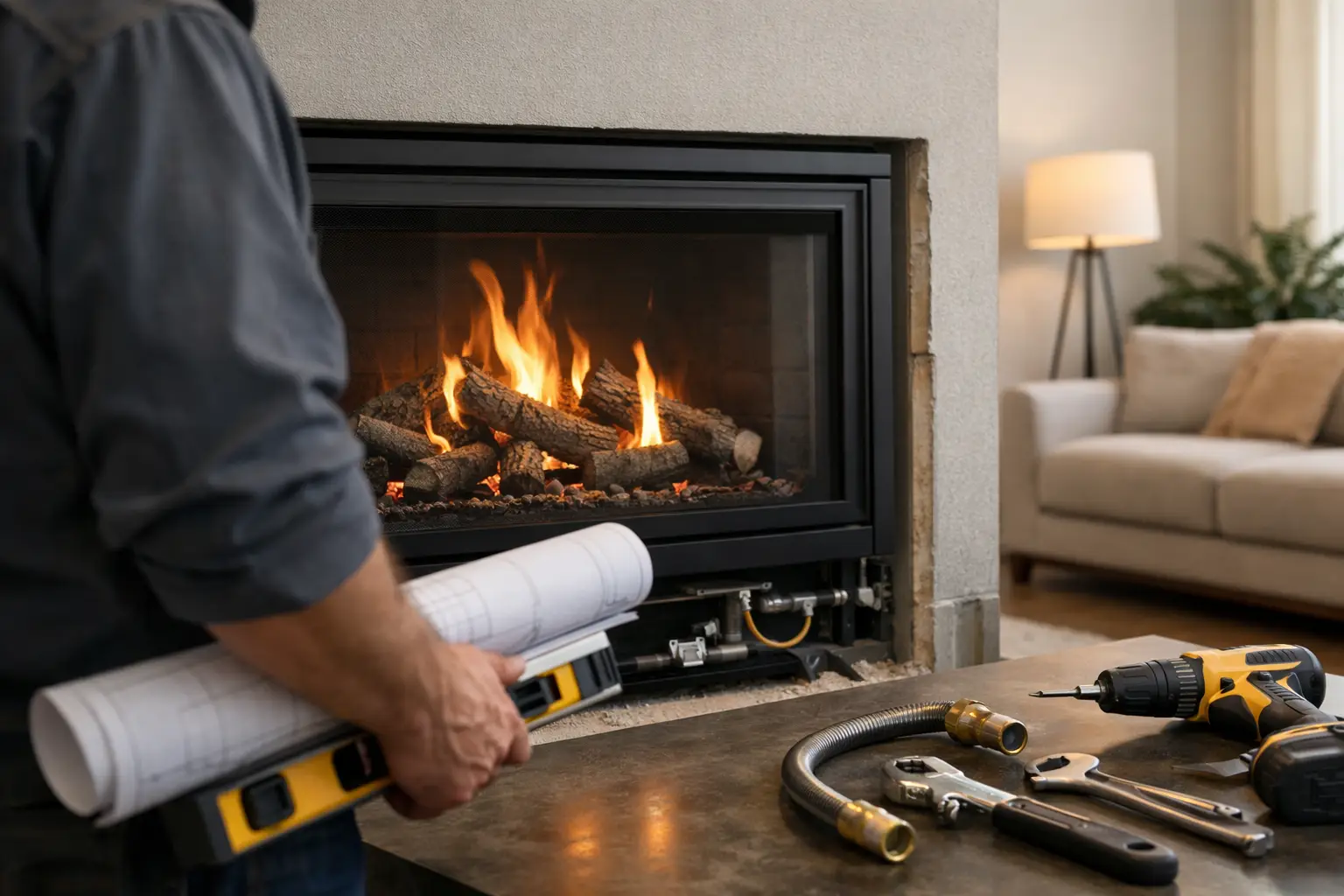
Use this gas fireplace installation guide to plan a safe, code-compliant project, understand permits, ventilation, placement, and professional startup.
A gas fireplace can make a Miami-area home feel more comfortable on cool evenings while adding a polished focal point to a living room, bedroom, or covered outdoor space. But the fireplace itself is only one part of the project. This gas fireplace installation guide explains the decisions that protect your property, support reliable performance, and help the installation move forward with fewer surprises.
Natural gas work requires careful planning, code-compliant materials, proper testing, and professional commissioning. The right system should fit the room, the structure, the available gas supply, and the manufacturer’s requirements – not simply the space where it looks best.
The first decision is selecting a fireplace design that suits the building and intended use. Direct-vent fireplaces are a common choice because they draw combustion air from outdoors and vent exhaust directly outside through an approved vent system. They can often be installed without a traditional masonry chimney, which gives homeowners more flexibility in room selection.
Some projects involve a gas insert placed into an existing wood-burning fireplace. Others use a built-in fireplace for a new feature wall, a freestanding unit, or an approved outdoor fireplace. Each option has different clearance, venting, framing, and gas-line requirements.
Do not choose based on appearance alone. A larger unit may produce more heat than a smaller room can comfortably handle. A unit intended for indoor installation is not automatically suitable for a covered patio, and an outdoor-rated appliance has its own location and weather-exposure requirements. The appliance manual is central to the project because it specifies the exact venting components, clearances, termination location, and installation conditions the manufacturer allows.
A good installation begins with a site review before framing is closed or finishes are selected. The installer needs to evaluate the wall or fireplace opening, nearby windows and doors, rooflines, exterior obstructions, electrical access, and the path for the gas piping and vent system.
For a direct-vent unit, the vent termination cannot be placed wherever it is most convenient. Required separation from openings, corners, overhangs, meters, regulators, and other building features helps prevent exhaust from re-entering the home and protects proper appliance operation. A short vent route may be possible in one location but not another. Vertical and horizontal runs also have manufacturer-specific limits.
Indoor placement requires attention to clearances from combustible framing, flooring, mantels, trim, televisions, furniture, and decorative finishes. Heat-management systems may be available for certain models, but they must be designed around the specific appliance. A beautiful stone surround or custom millwork should never be built until the required clearances and installation instructions are confirmed.
In South Florida, the exterior portion of the work deserves extra attention. Humidity, wind-driven rain, salt air near the coast, and storm exposure can affect the selection and placement of exterior components. A professional review helps identify a vent route and termination location that work with both the appliance and the property.
A fireplace needs a properly sized gas line, not simply a connection to the nearest existing pipe. Gas piping is sized according to the appliance demand, the length of the run, the system pressure, the pipe material, and the total connected load on the property.
That total load matters. A home may already have a gas range, water heater, dryer, pool heater, generator, or outdoor kitchen. Adding a fireplace without evaluating the entire system can lead to inadequate supply, performance issues, or an installation that cannot pass inspection. Commercial properties may have even more equipment and a more complex piping layout.
The project may require a new branch line, an approved shutoff valve, sediment trap, regulator evaluation, or changes at the meter. These are not details to decide after the fireplace is mounted. Reviewing them early gives the contractor, homeowner, and other trades a clearer path forward.
Gas piping must also be pressure-tested and checked for leaks according to applicable requirements before the appliance is placed into service. This is a core safety step, not a formality.
Gas fireplace work typically involves permits and inspections, although the exact requirements depend on the local jurisdiction, the scope of work, and whether the project includes new piping, venting, electrical work, framing, or a structural modification. Miami-Dade, Broward, and individual municipalities can have different processes.
Permits help verify that the work follows applicable building, fuel gas, mechanical, electrical, and fire-safety requirements. They also create a record that can be useful when selling, leasing, insuring, or managing a property.
For homeowners, this process can feel technical. A qualified gas service professional can explain what the project requires, coordinate the gas-related scope, and help avoid common issues such as unapproved vent components, inaccessible shutoff valves, improper appliance locations, or missing inspection documentation. For property managers and business owners, early coordination is especially valuable because it reduces disruption to tenants, schedules, and finish work.
A fireplace installation often overlaps with carpentry, drywall, tile, stone, painting, electrical work, and HVAC planning. The gas and venting work should be coordinated before the surrounding wall is finished.
Electrical power may be needed for ignition, blowers, lights, remote controls, or smart controls. The fireplace cavity may need specific framing dimensions, noncombustible materials, access panels, and support for a mantel or finish system. If a television is planned above the fireplace, the design should account for heat, wiring, mounting height, and the appliance manufacturer’s guidance.
This is where a simple sketch can prevent expensive changes. Mark the fireplace dimensions, vent path, gas-line route, electrical location, wall finishes, and access points before construction begins. If the unit is an insert, confirm the existing firebox and chimney are suitable for the approved liner and connection method.
The physical installation is not complete when the fireplace is set in place. A proper startup verifies that the appliance operates as intended and that the gas system is safe.
The technician should install the appliance and listed venting components according to the manufacturer instructions, make the approved gas connection, test the piping, and check ignition and burner operation. The flame appearance should be evaluated after the unit has run long enough to stabilize. Controls, safety shutoffs, and any blower or remote functions should also be tested.
You should receive clear operating guidance before using the fireplace. That includes how to light and turn off the unit, where the gas shutoff is located, what normal operation looks and sounds like, when to replace remote batteries, and when to call for service. Keep the owner’s manual and installation records with your property documents.
A fireplace should be maintained according to its manufacturer schedule. Regular service can include inspecting the vent system, burner, pilot or ignition components, glass assembly, gaskets, controls, and surrounding clearances. If you notice gas odor, soot, unusual flame behavior, delayed ignition, or damage to venting or glass, stop using the appliance and contact a qualified gas professional.
Before approving a project, ask whether the selected fireplace is appropriate for the room and application, how it will vent, what gas-supply evaluation is needed, and which permits or inspections apply. Ask how the work will coordinate with framing and finishes, and make sure you understand the startup and maintenance process.
It also helps to share the full picture from the start. Mention existing gas appliances, remodel plans, outdoor conditions, preferred finishes, and any concerns about vent visibility or appliance placement. A detailed conversation early on leads to a more dependable installation later.
For homeowners and property professionals in Miami and surrounding South Florida communities, Prestige Gas Services Corp can provide personalized guidance for natural gas fireplace projects and related gas piping needs. Request a free quote before construction begins, so the gas, venting, and placement plan can be reviewed with safety and long-term reliability in mind.
The best fireplace projects feel simple after they are finished: consistent warmth, clean operation, and confidence that the system behind the wall was installed with the same care as the design in front of it.
In this article
Discuss Your Gas Project
Contact Prestige Gas Services for natural gas and propane service in Miami-Dade and Broward counties. Request a free estimate.