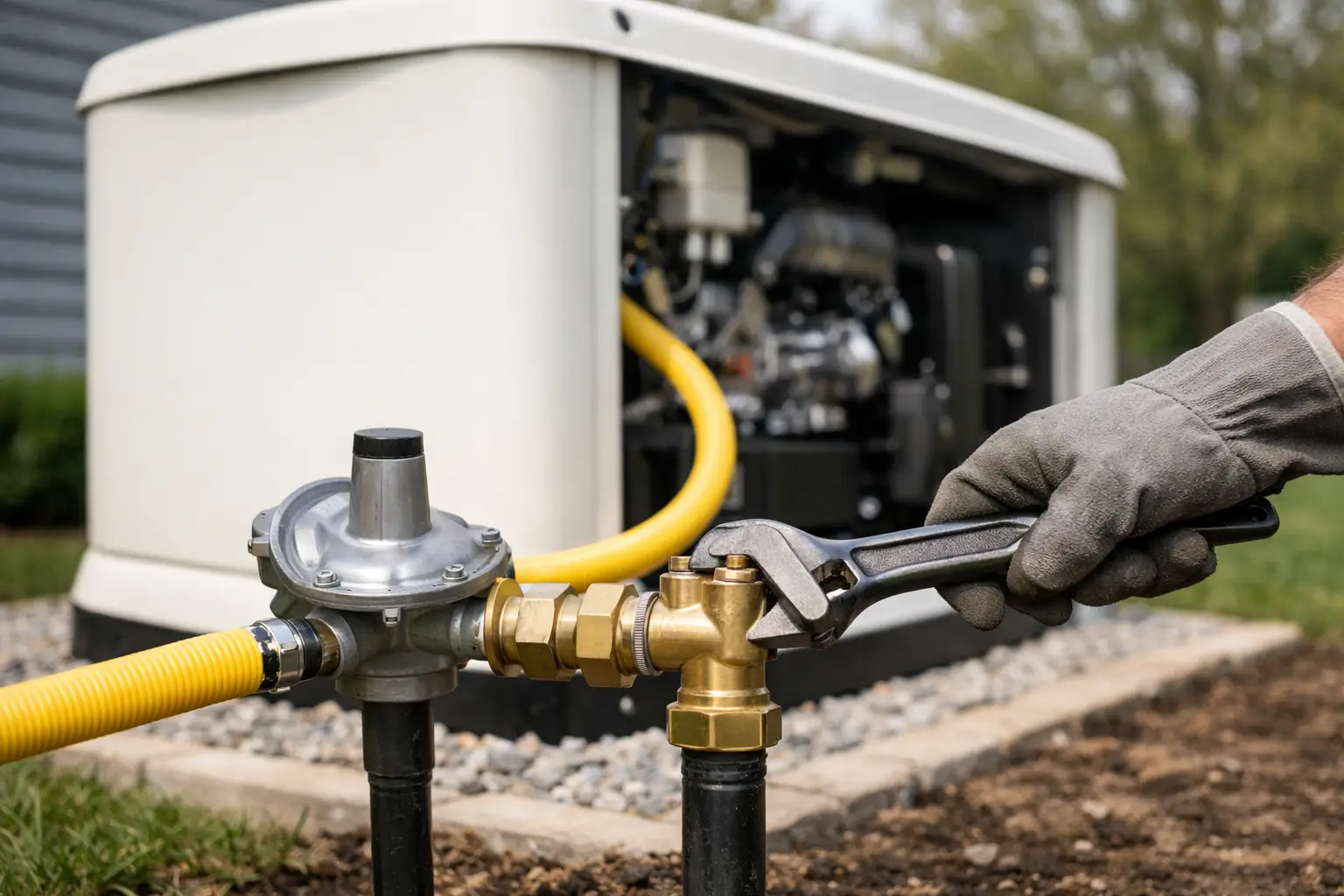
Generator gas line installation requires safe sizing, code compliance, and expert planning to protect performance, reliability, and peace of mind.
When the power goes out, the generator itself is only part of the equation. If the fuel supply is undersized, poorly routed, or installed without the right safety controls, the system may not perform when you need it most. That is why generator gas line installation deserves careful planning from the start, especially for homeowners and property managers who want dependable backup power without added risk.
A standby generator asks a lot from the gas system. It needs a consistent fuel supply, proper pressure, code-compliant materials, and a layout that supports both safety and performance. For many properties, the work is not as simple as connecting a line and turning the unit on. The existing gas service, distance from the meter, total BTU demand, and local permitting requirements all affect the final design.
A generator can only do its job if the gas line feeding it is designed for the actual load. That sounds obvious, but it is where many property owners run into trouble. A line that looks adequate may still be too small once you account for pipe length, fittings, gas pressure, and the demand from other appliances already on the system.
The result of a poor installation can range from nuisance shutdowns to weak generator performance or unsafe operating conditions. In a storm-prone area like South Florida, reliability is not a minor detail. If a generator is being installed to protect a home, business, refrigeration system, security equipment, or critical building operations, the gas line has to be treated as a key part of the project, not an afterthought.
For commercial properties and multi-use buildings, the stakes are often even higher. Backup power may support lighting, life safety systems, point-of-sale equipment, or tenant operations. In those settings, gas infrastructure needs to be planned with a clear understanding of the building’s fuel demand and compliance obligations.
Good generator gas line installation starts with an evaluation of the property and the fuel supply already in place. The first question is whether the current gas service can support the generator in addition to existing appliances such as water heaters, ranges, dryers, pool heaters, or commercial equipment. If the system is already near capacity, the solution may involve changes beyond the generator connection itself.
From there, the gas line route has to be planned carefully. Distance matters because longer runs can reduce available pressure if the line is not sized correctly. Pipe material, connection points, shutoff valve placement, regulator requirements, and clearance from structures or ignition sources all need attention. The best layout is not always the shortest one. Sometimes the safer and more reliable route is the one that better protects the line and allows proper access for service.
Permitting and code compliance are also part of the process. Gas work is regulated for good reason. A properly permitted installation helps confirm that the work meets safety standards and that the generator system is being supported by fuel infrastructure designed for its intended use.
Sizing is one of the most important parts of the job. A generator’s fuel demand is usually stated in BTUs or cubic feet per hour, but that number is only one piece of the calculation. The installer also has to consider how far the gas has to travel, the pressure available from the utility, and what else is drawing gas at the same time.
This is where trade-offs come into play. A property owner may choose a larger generator for broader backup coverage, but a larger unit may also require upgrades to the gas piping system. In some cases, the existing line can be extended safely. In others, the correct approach may be to install a larger dedicated branch line or review whether the meter and upstream supply are adequate.
That does not mean every project becomes complicated. Many homes and smaller commercial spaces can support a standby generator with a straightforward, well-planned gas line addition. The key is confirming what the system can actually handle instead of making assumptions based on appearance or convenience.
The most common problem is undersizing. When a gas line is too small, the generator may start but fail under heavier electrical load, or it may run inconsistently. That kind of issue often shows up at the worst possible time – during an outage, in bad weather, when reliable power matters most.
Poor routing can also create problems. Exposed piping in vulnerable areas, awkward valve access, or layouts that complicate future service may not seem serious on day one, but they can become costly and inconvenient later. A professional installation takes the long view and plans for safety, serviceability, and durability.
Another issue is failing to look at the whole gas system. A generator does not operate in isolation. If adding one creates pressure or capacity problems for other appliances, the property may experience performance issues in more than one place. That is why experienced gas contractors assess the broader system instead of focusing only on the final connection point.
For homeowners, the goal is usually peace of mind. They want confidence that the generator will start, run, and support essential appliances or whole-home backup without fuel-related problems. In that setting, clear communication matters just as much as technical accuracy. Property owners want to understand what is being installed, why the line is being routed a certain way, and whether the gas system can support the generator safely.
Commercial clients often have additional considerations. Equipment locations may be more complex, fuel demand can be higher, and downtime may affect operations, tenants, or customers. Scheduling, permitting, and coordination with other project trades may also play a bigger role. In those cases, working with a specialist in gas plumbing can help keep the installation organized and compliant.
A qualified contractor will usually begin with a site review and fuel demand assessment. That includes checking the generator specifications, reviewing existing gas appliances, evaluating the available gas service, and identifying the best route for the line. If there are space constraints, access limitations, or code-related concerns, those should be addressed before installation begins.
You should also expect clear communication about the scope of work. Gas projects tend to feel stressful for customers because the systems are technical and safety-sensitive. A dependable contractor reduces that stress by explaining the process in plain language, identifying any needed upgrades early, and handling the job with a safety-first approach.
In Miami and surrounding areas, environmental factors can also influence planning. Outdoor equipment placement, exposure, and local code requirements matter. That is another reason generator gas line work should be tailored to the property instead of treated like a one-size-fits-all installation.
This is specialized work. A general contractor may manage the broader generator project, but the gas portion should be handled by a professional with direct experience in gas plumbing, load calculations, and code-compliant installation. The goal is not just to get the line connected. The goal is to have a system that performs reliably and safely when the power is out and there is no room for guesswork.
Look for a company that communicates directly, understands natural gas infrastructure, and treats the project with the seriousness it deserves. That includes evaluating the full system, not just the generator stub-out, and being available to answer practical questions about routing, compliance, and long-term performance.
Prestige Gas Services Corp approaches these projects with exactly that mindset – safe, reliable gas work supported by clear communication and personalized service. For property owners who want confidence in the finished system, that kind of focused expertise matters.
A generator is there for the moments when normal systems fail. The gas line behind it should be planned with that same standard in mind, so when the outage happens, your backup power is ready to do its job.
In this article
Discuss Your Gas Project
Contact Prestige Gas Services for natural gas and propane service in Miami-Dade and Broward counties. Request a free estimate.