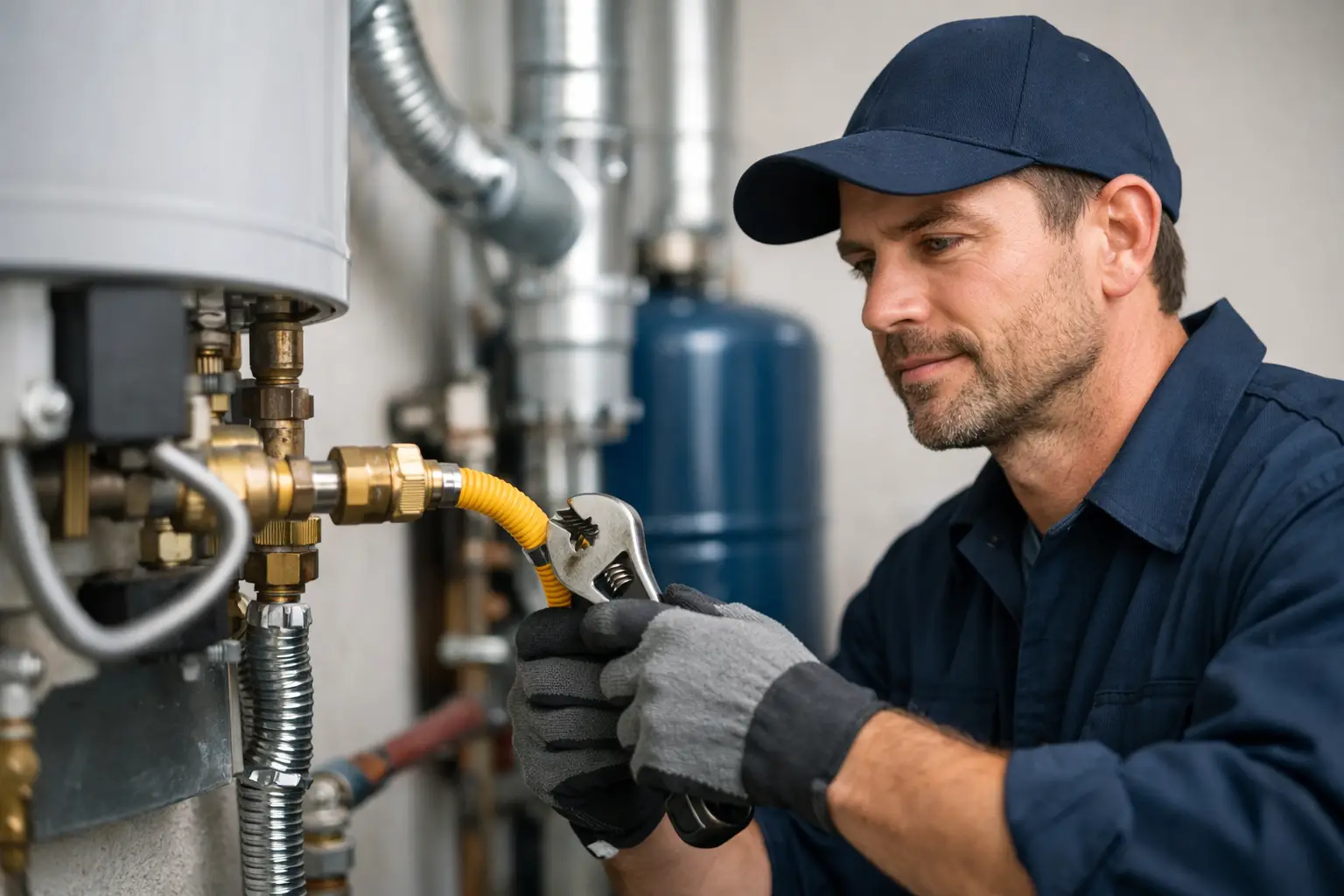
Learn how to choose a licensed gas plumber with confidence. Use these tips to verify credentials, safety standards, and reliable service.
When a gas line needs attention, most people are not looking for the cheapest name on a list. They are looking for someone who will do the work safely, explain it clearly, and leave nothing to chance. That is exactly why knowing how to choose a licensed gas plumber matters. Gas work is not a trial-and-error service. It requires training, code knowledge, and a serious commitment to safety.
In South Florida, property owners often need gas service for new appliance connections, line installations, renovations, commercial build-outs, or system upgrades. In each of those situations, the right contractor should make the process feel clear and controlled, not confusing. A licensed gas plumber brings more than tools to the job. They bring accountability.
Gas plumbing is specialized work. A general handyman or an unqualified contractor may say they can handle it, but gas systems are not an area where assumptions are acceptable. Improper installation can create immediate safety hazards, code violations, failed inspections, and long-term reliability problems.
A licensed gas plumber has met state or local requirements to perform regulated plumbing or gas-related work. That usually means verified experience, testing, and an understanding of applicable codes. It also means there is a standard of responsibility behind the work. If you are hiring for a home, restaurant, multifamily property, or commercial space, that matters.
The biggest benefit is confidence. You want to know the person working on your gas system understands proper pipe sizing, venting requirements where applicable, shutoff placement, pressure testing, and permit expectations. You also want a contractor who recognizes when a project has complications and addresses them directly rather than improvising.
The best hiring decisions usually come down to a few simple checks done carefully. A polished website or quick estimate may be helpful, but neither replaces proper verification.
The first step in how to choose a licensed gas plumber is confirming the contractor actually holds the proper license for the work being proposed. Do not assume that every plumber handles gas work at the same level, and do not rely only on verbal reassurance.
Ask what license they carry and whether it covers the specific scope of your project. A gas line for a commercial kitchen, for example, may involve a different level of planning and coordination than connecting a residential generator or range. The contractor should be comfortable explaining this in plain language.
A good sign is directness. A qualified company should not hesitate when you ask about credentials, permitting, or inspection requirements. If the answers are vague, rushed, or dismissive, that tells you something.
Plumbing and gas plumbing overlap, but they are not the same thing in practice. If your project involves natural gas service, choose a contractor with clear experience in gas installations and gas system work. This is especially important for larger residential projects and commercial properties where code compliance and system performance can affect daily operations.
Ask what type of gas work they handle most often. Someone who regularly installs gas lines, connects appliances, supports remodels, and works through inspections is usually better prepared than a company that only takes occasional gas jobs. Experience tends to show in the questions they ask, the way they explain the process, and how seriously they approach safety.
A licensed gas plumber should be able to tell you whether permits are required and what the inspection process looks like. In many cases, this is not optional. It is part of doing the work correctly.
This is where homeowners and property managers often get peace of mind. A qualified contractor should be able to explain what paperwork may be needed, how the work will be reviewed, and what steps are taken before the system is placed into service. They should not treat permits as a nuisance or suggest cutting corners to save time.
In areas like Miami and surrounding communities, local code requirements can be strict, and that is a good thing. Gas work should stand up to inspection because it was planned properly from the start.
Credentials matter, but the hiring decision should also account for how the company communicates and operates. Gas service is technical, but good service should still feel straightforward.
A reliable contractor explains the job in a way that makes sense. They should be able to tell you what they are doing, why it is needed, and what the next step will be. That does not mean overwhelming you with technical language. It means being organized, responsive, and willing to answer questions.
This matters before the work begins and during the project. If you are constantly chasing updates or getting unclear answers, that can be a sign of larger issues behind the scenes.
Experienced gas plumbers do not give one-size-fits-all answers. They ask about the appliances involved, the building type, the existing service, the intended use, and whether any remodeling or expansion is planned. For commercial properties, they may also ask about equipment load, operating hours, or access requirements.
These questions are not a sales tactic. They are part of evaluating the job correctly. A contractor who takes time to understand the property is more likely to recommend the right solution.
Every company says safety matters. The difference is whether they can show it in how they work. A dependable gas plumber should talk comfortably about testing, code compliance, shutoffs, inspection steps, and proper installation methods. They should also avoid making the work sound casual.
If a contractor minimizes the risk or acts like gas work is no different from a basic fixture swap, that is a reason to be cautious. Professional confidence is reassuring. Carelessness is not.
If you are comparing providers, a short conversation can tell you a lot. Ask whether they regularly perform gas line installations and related service work. Ask who handles permits if needed. Ask how they approach inspections and testing. Ask what kind of properties they serve most often.
You can also ask how they communicate during a project. For a homeowner, that may mean understanding scheduling and job progress. For a property manager or business owner, it may mean coordinating access, minimizing disruption, and keeping the work on track.
The right contractor should answer these questions without becoming defensive or overly technical. Straight answers are a good sign.
Some warning signs are easy to miss because they are presented as convenience. Be careful with contractors who want to skip permits, avoid discussing licensing, or promise unusually fast work without much review of the property. Gas service should be efficient, but it should also be deliberate.
Another red flag is poor specialization. If a company mainly handles unrelated services and only occasionally takes gas jobs, you may not be getting the focused expertise your project needs. That does not automatically mean they are unqualified, but it does mean you should ask more questions.
Pay attention to how the company handles your initial inquiry. If they are hard to reach, unclear about their process, or inconsistent in communication before the job starts, that experience may continue once the work is underway.
The right fit can depend on the property type. For homeowners, the priority is often peace of mind. You want a licensed gas plumber who can explain the scope clearly, complete the work safely, and keep the process simple.
For commercial clients and property managers, reliability often includes a broader set of needs. You may need a contractor who understands scheduling demands, code compliance documentation, tenant considerations, or the requirements of specialized equipment. In those cases, choosing a company that regularly works across both residential and commercial environments can be a practical advantage.
If you are in Miami or nearby areas, local experience also helps. Contractors familiar with regional permitting processes and inspection expectations can often move a project forward more smoothly because they know what the work must satisfy.
A good gas plumber should leave you feeling more certain, not more confused. The best choice is usually the contractor who combines proper licensing, gas-specific experience, clear communication, and a steady approach to safety. When the work involves something as important as your gas system, peace of mind is not a bonus. It is part of the service.
In this article
Discuss Your Gas Project
Contact Prestige Gas Services for natural gas and propane service in Miami-Dade and Broward counties. Request a free estimate.