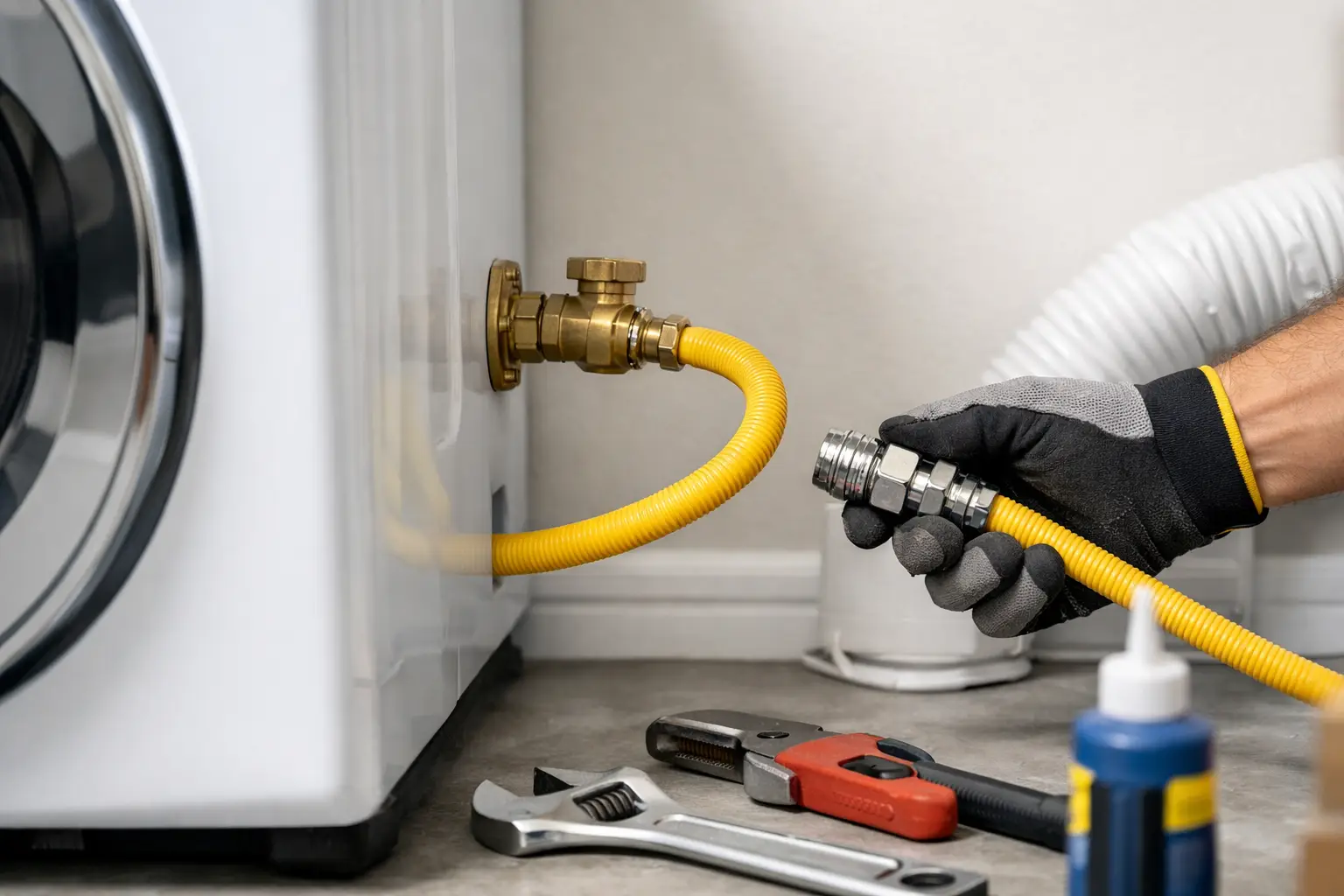
Learn how to install a gas dryer line safely, what code and venting issues matter, and when to call a licensed gas professional for help.
A gas dryer can be a smart upgrade, but the moment the conversation turns to how to install a gas dryer line, safety becomes the whole job. This is not like swapping a cord on an electric appliance. A gas dryer line involves fuel supply, shutoff access, leak testing, proper materials, appliance connector rules, and local code requirements. If any part of that chain is wrong, the risk is real.
For most property owners, the key question is not whether a dryer can be connected. It is whether the home or building already has the right gas capacity, the correct pipe routing, and a compliant location for the appliance. That is where a licensed gas specialist matters. Done properly, a gas dryer line should deliver safe, reliable performance for years.
When people ask how to install a gas dryer line, they often picture a simple hose connection behind the appliance. In practice, the work may begin much earlier in the system. The gas supply may need a dedicated branch line from the existing manifold, a properly sized shutoff valve, sediment trap requirements depending on local code, and a listed flexible appliance connector that matches the dryer manufacturer instructions.
The dryer itself also needs the right space and support conditions. Clearances matter. Venting matters. Access to the shutoff matters. If the laundry area is being remodeled or moved, the installation may also involve planning around walls, cabinetry, combustion air, and the shortest safe route for both gas piping and exhaust venting.
That is why the safest approach starts with evaluating the entire setup, not just the last three feet behind the dryer.
The first step is confirming the appliance type and fuel source. A natural gas dryer and an LP dryer are not interchangeable unless the unit is specifically converted according to manufacturer requirements. The gas service available at the property must match the appliance.
Next comes line sizing. A dryer does not use as much gas as some larger appliances, but the branch line still has to be sized correctly based on total system demand, pipe length, and the number of appliances already connected. If the property has a tankless water heater, range, generator, or pool heater on the same system, that calculation becomes more important.
Placement is just as important. The dryer needs a location that supports proper venting to the outdoors and allows the flexible connector to remain protected from strain, crushing, or kinking. Tucking a dryer too tightly into a closet or alcove can create problems even if the gas connection itself is technically sound.
The proper process depends on the building, the appliance location, and local code, but the standard sequence is straightforward. A licensed professional begins by shutting off the gas supply where required and confirming the route for the new branch line. From there, approved piping materials are installed and secured, with the shutoff valve placed in an accessible location.
Once the branch line is in place, the connector and fittings must be selected for appliance use and installed without improvised parts. This is where many unsafe setups begin – mixing incompatible fittings, overusing sealant, reusing old connectors, or forcing the dryer into position after the connection is made. A gas dryer line should never be treated like a temporary hookup.
After installation, the system must be tested for leaks using proper procedures. That means more than a quick glance or guess. Pressure testing and leak verification are essential before the appliance is put into service. Then the dryer can be positioned carefully so the connector and vent are not pinched or damaged.
The final step is operational testing. The dryer should ignite properly, run as intended, and vent efficiently. A clean flame pattern, normal cycling, and proper exhaust flow all matter because a successful installation is about the full appliance environment, not just the pipe connection.
The biggest issue is assuming the gas source is ready when it is not. In some homes, the existing line is undersized or too far from the laundry location to support a clean, compliant connection. In others, the dryer space was designed for electric service only, which means both the gas piping and the venting path need attention.
Older properties can present another challenge. Previous work may not meet current standards, or there may be aging fittings and valves that should not be left in service. If the laundry area has been modified over time, hidden conditions behind walls can affect how the new line should be routed.
Commercial and multi-unit properties add another layer. Access, occupancy concerns, shutoff coordination, and permitting may all affect the timeline and scope. In these cases, experience with gas work matters because the installer has to balance safety, code compliance, and practical building operations.
Gas work is regulated for a reason. A dryer line installation may require permitting and inspection depending on the scope of work and local jurisdiction. Even when the connection appears simple, code requirements still govern pipe sizing, material type, valve placement, connector use, venting, and testing.
This is especially relevant in South Florida, where property types vary widely and local enforcement can differ by municipality. A single-family home, condo laundry room, or commercial laundry area may each bring different installation considerations. Working with a qualified gas professional helps ensure the system is installed to current standards and that nothing critical is overlooked.
For property owners and managers, that peace of mind matters. A properly installed gas dryer line supports safety, protects the appliance, and helps avoid preventable issues after occupancy or inspection.
A gas dryer line is only one part of a safe dryer installation. The appliance also produces combustion byproducts and moisture, which means venting has to be correct. If the exhaust duct is too long, crushed, poorly routed, or blocked, dryer performance suffers and safety concerns can increase.
This is where some installations go wrong. The gas connection is made, but the vent is left as an afterthought. A dryer that cannot exhaust properly may run hotter, dry less efficiently, or create conditions that shorten appliance life. That is why a complete installation review should always include both gas supply and dryer vent path.
If you smell gas near the laundry area, hear hissing near a fitting, notice a damaged connector, or are converting a space from electric to gas, professional service is the right next step. The same is true if you are moving the dryer to a new location, adding another gas appliance to the property, or working in a building with older gas piping.
There is also the simple fact that many owners do not know what is behind the wall, what the existing gas load is, or whether the visible valve and outlet are still in acceptable condition. That uncertainty is reason enough to bring in a qualified specialist. With gas, assumptions are where problems start.
Prestige Gas Services Corp works with homeowners and property managers who want clear answers, safe installation, and dependable natural gas service without guesswork. For a project like a gas dryer line, that kind of focused support can save time and reduce risk.
A proper assessment should look at the gas source, the route to the dryer, appliance specifications, shutoff access, venting, and the overall condition of the existing system. It should also account for whether the property may need permit coordination or updated components to meet current standards.
Just as important, the recommendations should be easy to understand. Most customers do not need every technical detail. They need to know whether the installation is feasible, what safety issues matter, and what steps will produce a reliable result. Good gas service is not about making the project sound complicated. It is about making the process clear and safe.
If you are planning a new gas dryer or replacing an old setup, the smartest move is to treat the line installation as part of the property’s broader gas system. That mindset leads to better decisions, fewer surprises, and a much safer finished installation.
A gas dryer should make laundry easier, not create uncertainty. When the line is installed correctly, tested properly, and matched to the space, you get the benefit of dependable performance and the confidence that the job was handled the right way.
In this article
Discuss Your Gas Project
Contact Prestige Gas Services for natural gas and propane service in Miami-Dade and Broward counties. Request a free estimate.