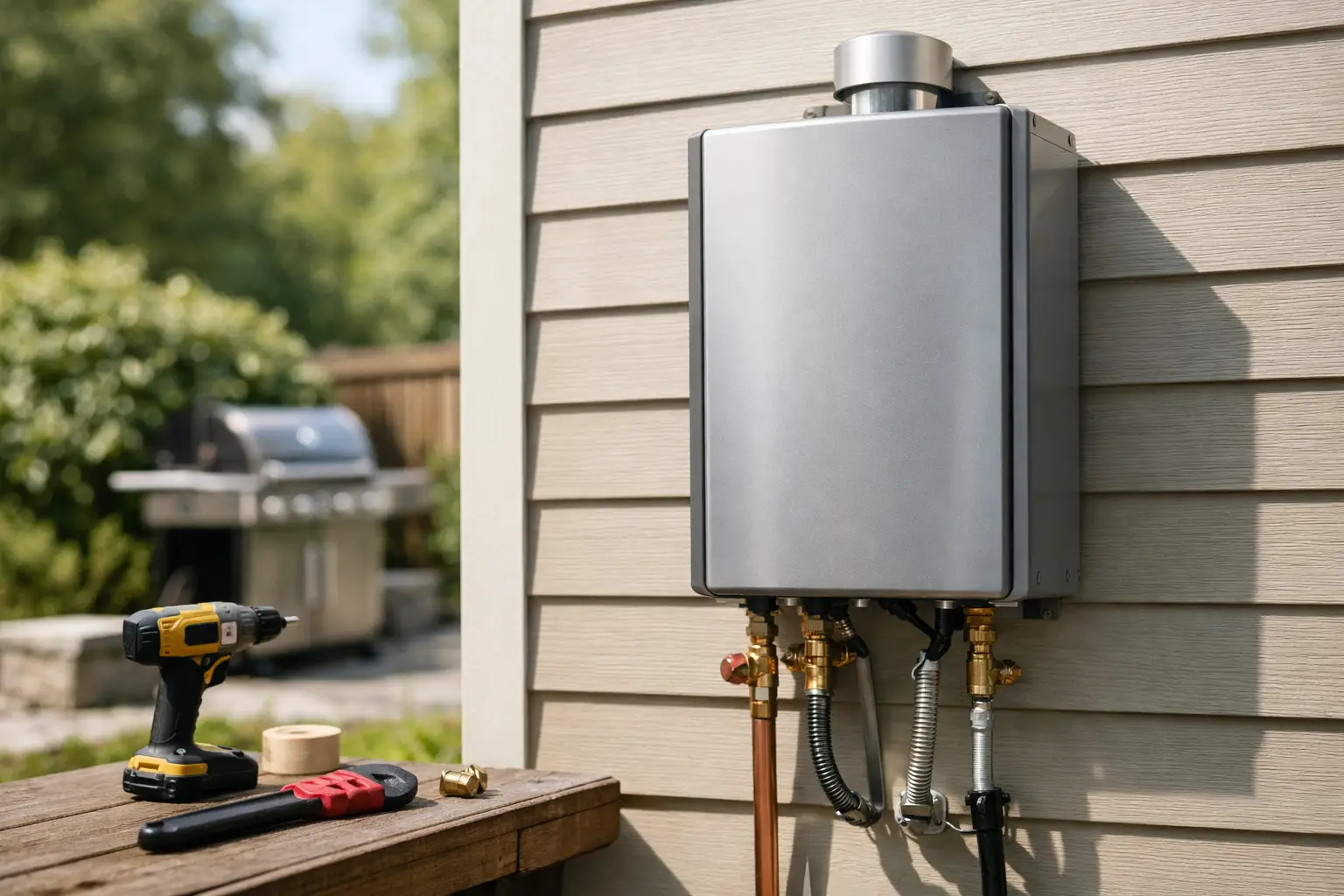
Learn how to install an outdoor tankless water heater safely, from site planning and gas sizing to permits, testing, and professional startup service.
A tankless water heater can be an excellent fit for a South Florida property, but knowing how to install an outdoor tankless water heater starts with more than choosing a spot on an exterior wall. The unit needs adequate gas capacity, a reliable water supply, proper clearances, electrical protection, and an installation that meets local requirements. When one of those details is missed, the result can be inconsistent hot water, error codes, premature equipment wear, or a serious safety concern.
Outdoor models are designed to vent directly outdoors, which can simplify the equipment layout compared with an indoor unit. That does not make the installation casual. Natural gas work and final equipment startup should be handled by a qualified gas professional who can verify the full system, not just connect the appliance.
The mounting location affects performance, access, safety, and the life of the water heater. An outdoor tankless unit should be installed on a stable exterior surface where it can be securely mounted according to the manufacturer’s instructions. It also needs enough open space around it for airflow, combustion, service access, and safe discharge from the pressure relief valve.
Avoid placing the unit where exhaust could enter windows, doors, soffit vents, or other building openings. It should also be kept away from areas where people regularly gather, where vehicles may strike it, or where landscaping and stored materials can block airflow. A narrow side yard may look convenient, but it may not provide the clearance or access the manufacturer requires.
In Miami and surrounding areas, weather exposure deserves extra attention. The unit’s enclosure is built for outdoor use, but it still benefits from a location that limits direct spray from irrigation, standing water, impact from windblown debris, and unnecessary salt exposure near coastal properties. The mounting surface, fasteners, and nearby piping should be selected for the local environment.
Tankless water heaters heat water as it flows through the unit. Their capacity is measured by the temperature rise they can deliver at a given flow rate, not by storage tank gallons. A unit that is too small may work well for one shower but struggle when multiple fixtures run at once.
Before installation, consider the property’s peak hot-water demand. A home may need to supply showers, bathroom faucets, a kitchen sink, and laundry equipment. A restaurant, salon, multifamily property, or other commercial location may have a more concentrated and demanding usage pattern. Incoming water temperature, fixture flow rates, and the desired outlet temperature all influence sizing.
This is also the time to determine whether one unit is enough. Larger homes and commercial properties may need multiple units, a dedicated recirculation design, or separate zones for more consistent service. Selecting equipment based only on the number of bathrooms can lead to disappointing results.
A high-output natural gas tankless water heater can require significantly more gas input than a conventional storage water heater. The existing gas line may have served the previous appliance adequately while still being undersized for the new tankless unit.
A qualified installer should evaluate the gas meter capacity, existing appliances, pipe material, pipe route, developed length, and total connected load. This calculation determines whether the current gas piping can safely supply the new heater while other appliances are operating. In some cases, a dedicated line or other gas infrastructure upgrade is necessary.
Do not treat gas sizing as a detail to solve after the water heater is mounted. A correctly sized unit with an inadequate gas supply will not perform as intended. It may cycle off, display fault codes, or fail to maintain the requested water temperature during high demand.
The water heater needs properly routed cold-water supply and hot-water outlet connections, accessible isolation valves, and a service arrangement that allows future flushing and maintenance. Hard water, sediment, and mineral buildup can reduce efficiency over time, so planning for routine service from the start is practical.
Most outdoor tankless units also require an electrical connection for ignition, controls, and freeze protection features. The electrical supply must be installed and protected appropriately for an outdoor location. Even in South Florida, occasional cold weather can occur, and the unit’s protective features only work when power is available.
The pressure relief valve discharge must be installed in accordance with the manufacturer instructions and applicable code. Condensate may also need to be addressed for certain high-efficiency units. The exact drainage approach depends on the equipment and site conditions, so it should be planned before piping is finalized rather than treated as an afterthought.
Water heater replacements and gas appliance installations commonly require permits and inspections. Requirements can vary by municipality, property type, and the scope of work. A permitted installation provides an added layer of verification that the gas piping, water piping, appliance location, and safety components have been evaluated.
For commercial properties, the review may involve additional considerations such as appliance demand, occupancy, accessibility, and coordination with other building systems. Property managers should also consider when work can be performed with minimal interruption to tenants or operations.
A professional installer can help identify the permit path before work begins. This is particularly valuable when an outdoor installation involves a new gas run, electrical work, structural mounting, or changes to the existing hot-water distribution system.
The physical installation follows the unit-specific manufacturer instructions, but the project generally moves through a clear sequence. The equipment is first confirmed to be correctly sized, then the mounting location and necessary clearances are verified. The installer prepares the wall or mounting structure, secures the unit, and routes the water, gas, electrical, relief, and drainage components as required.
The gas connection is not a place for shortcuts. Proper materials, approved shutoff valves, pressure testing, and leak testing are essential. The installer must also confirm that combustion air and exhaust discharge remain unobstructed once the unit is in its final position.
After connections are complete, the system is filled, purged, and checked for water leaks. The unit is then started following the manufacturer’s procedure. A proper startup includes confirming ignition, measuring operational performance, checking for fault codes, verifying temperature settings, and testing hot water at fixtures. The goal is not simply to see that hot water appears. It is to verify that the system operates safely and consistently under real demand.
Before scheduling the installation, have these details ready for your gas professional:
These details help the installer identify potential upgrades before installation day and provide clearer guidance on the right equipment and layout.
An outdoor tankless water heater needs periodic maintenance to remain efficient and dependable. The service schedule depends on water conditions, usage, and the manufacturer’s requirements. Typical maintenance may include flushing the heat exchanger, cleaning inlet screens, inspecting connections, checking the vent and air openings, and reviewing error-code history.
Keep the area around the unit clear. Do not stack patio items, cleaning supplies, plants, or storage bins against the heater. After storms or landscaping work, take a quick look to make sure no debris has collected around the air openings or piping.
If the unit begins producing fluctuating temperatures, reduced flow, unusual noises, or error messages, arrange professional service promptly. Early attention can prevent a small performance issue from becoming a system outage.
For homeowners, property managers, and businesses, the best outdoor tankless installation is one that is sized correctly, permitted where required, and tested as a complete gas and water system. Prestige Gas Services Corp helps Miami-area customers plan dependable natural gas installations with clear guidance and safety-focused workmanship. A qualified consultation before equipment is installed can make the difference between a heater that merely runs and one that delivers reliable hot water for years.
In this article
Discuss Your Gas Project
Contact Prestige Gas Services for natural gas and propane service in Miami-Dade and Broward counties. Request a free estimate.