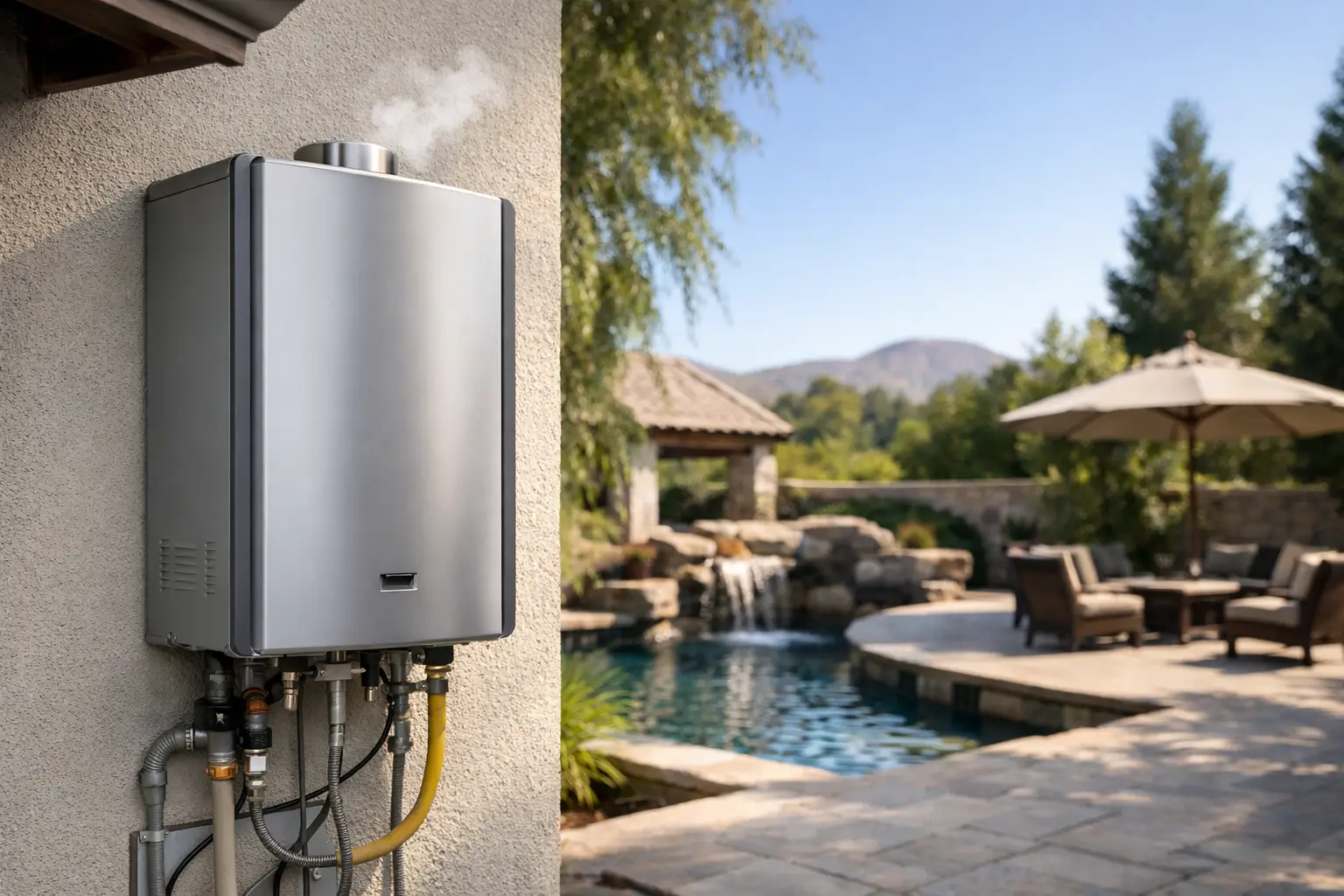
Learn how outdoor gas tankless water heaters work, where they fit best, and what to consider for safe, reliable installation in South Florida.
A bulky storage tank taking up room outside the house can feel like a compromise. For many property owners, outdoor gas tankless water heaters offer a cleaner setup, steady hot water, and a better use of space – but only when the installation is planned correctly.
That matters more than most people expect. With gas service, venting, placement, code requirements, and long-term reliability all in play, the right unit is only part of the decision. The bigger question is whether an outdoor model makes sense for your property and how to install it safely from the start.
Outdoor gas tankless water heaters heat water on demand instead of storing it in a large tank. When a hot water fixture turns on, the burner activates and the unit heats water as it moves through the system. That basic idea is what attracts many homeowners and property managers – less wasted space, no standby heating of a full tank, and a continuous hot water supply when the system is properly sized.
For South Florida properties, the outdoor configuration can be especially appealing because freezing conditions are less of a concern than they are in colder regions. An exterior installation may also free up interior utility space, which is valuable in smaller homes, multifamily layouts, and commercial properties where every square foot matters.
Still, the biggest advantage is not just convenience. It is control. A properly selected gas tankless system can be matched to the building’s hot water demand more precisely than a one-size-fits-all tank. That can improve performance in homes with multiple bathrooms, rental units with variable use, or businesses that need dependable hot water throughout the day.
Not every property is a good candidate for an outdoor unit. The layout of the building, the available gas supply, the location of fixtures, and access for service all affect whether the installation will perform well over time.
Outdoor placement often works best when there is a practical exterior wall near the main water demand. Shorter plumbing runs can help reduce wait time for hot water. It can also be a strong fit when indoor space is limited or when owners want to avoid dedicating interior utility closet space to water heating equipment.
For some commercial properties, an outdoor setup can simplify equipment placement and keep utility components out of tenant-facing areas. For some homes, it creates a cleaner mechanical layout and easier service access. But there are trade-offs. Exterior units are exposed to weather, salt air, and environmental wear, so the installation quality and the location of the unit matter just as much as the model itself.
The most common mistake in tankless planning is assuming the new unit can simply connect where the old system was. With gas equipment, that assumption can create performance problems and safety concerns.
Tankless water heaters often require a substantial gas input because they heat water instantly rather than gradually. That means the gas line serving the unit must be correctly sized for the heater’s demand and for the rest of the gas system on the property. If the gas supply is undersized, the heater may struggle to keep up, shut down unexpectedly, or fail to operate as intended.
Water demand sizing matters too. A unit that looks efficient on paper may not be large enough for the actual number of simultaneous showers, sinks, laundry loads, or business fixtures in use. On the other hand, oversizing without a clear need is not always the best answer either. The right approach is to look at peak demand, incoming water conditions, and how the property is actually used.
That is why professional evaluation matters. Safe, reliable natural gas work starts with accurate load calculations and site-specific planning, not guesswork.
Placement is not just about finding an empty wall. Outdoor gas tankless water heaters need to be installed where clearances, combustion air, service access, and exhaust discharge are all properly addressed. Even though outdoor models do not require the same venting arrangement as indoor units, they still need safe positioning away from openings and in accordance with applicable code requirements.
In coastal and humid areas, location also affects durability. Exposure to driving rain, salt-heavy air, sprinkler overspray, or corrosive conditions can shorten equipment life if the unit is installed in the wrong spot. A protected but code-compliant location is usually better than the most convenient wall.
Noise can also be a factor. Tankless units are not typically loud, but burner operation and fan noise may still matter near patios, bedroom walls, or customer-facing commercial spaces. Good planning takes these practical details into account before installation begins.
Tankless systems are often chosen for efficiency and convenience, but they still need regular maintenance to stay dependable. Like any gas appliance, they perform best when they are inspected, cleaned, and serviced on schedule.
Mineral buildup, burner issues, ignition faults, and water quality concerns can all affect performance over time. Outdoor units add another layer of exposure, so routine checks become even more important. That does not mean they are high-maintenance systems. It means they are precision equipment, and precision equipment benefits from professional attention.
For property owners, the practical takeaway is simple. A well-installed system is more likely to stay reliable, and a maintained system is more likely to deliver the steady hot water performance you expected when you chose tankless in the first place.
One of the first questions people ask is whether an outdoor tankless heater can really keep up with daily use. The honest answer is that it depends on proper sizing. A quality unit that is matched to the building’s demand can deliver excellent performance. A unit chosen without a serious look at flow demand may leave people disappointed.
Another common concern is exposure to the weather. In South Florida, outdoor installation is often a realistic option, but that does not mean every exterior location is equally suitable. Rain, humidity, and coastal conditions should be part of the planning process.
Property managers also tend to ask about reliability across multiple occupants or changing usage patterns. That is a fair concern. In rental and commercial environments, hot water demand can be less predictable than it is in a single-family home. Choosing equipment and gas infrastructure based on real-world usage is the best way to avoid service interruptions later.
If you are considering an outdoor tankless system, focus first on the installation environment rather than just the appliance brochure. The gas line capacity, water demand, equipment location, code requirements, and access for future service all need to make sense together.
It is also worth considering how the system fits into the rest of the property. If other gas appliances are being added or upgraded, that can affect overall gas load planning. If the water heater will serve a business, tenant space, or high-demand household, the design should reflect that reality from day one.
For many owners, the best next step is a direct site evaluation. That allows a qualified gas professional to determine whether an outdoor configuration is the right fit, identify any infrastructure upgrades that may be needed, and recommend a safe, reliable path forward. In Miami-area properties, where exterior conditions and code compliance both matter, that kind of planning helps prevent costly corrections and unnecessary downtime.
Prestige Gas Services Corp works with property owners who need dependable natural gas solutions and clear guidance on installations that have to be done safely. When the work involves gas, water, and outdoor placement, experience matters.
Outdoor gas tankless water heaters can be an excellent choice when the property, the gas service, and the installation plan all align – and that is exactly why taking the time to get it right at the beginning makes such a difference.
In this article
Discuss Your Gas Project
Contact Prestige Gas Services for natural gas and propane service in Miami-Dade and Broward counties. Request a free estimate.