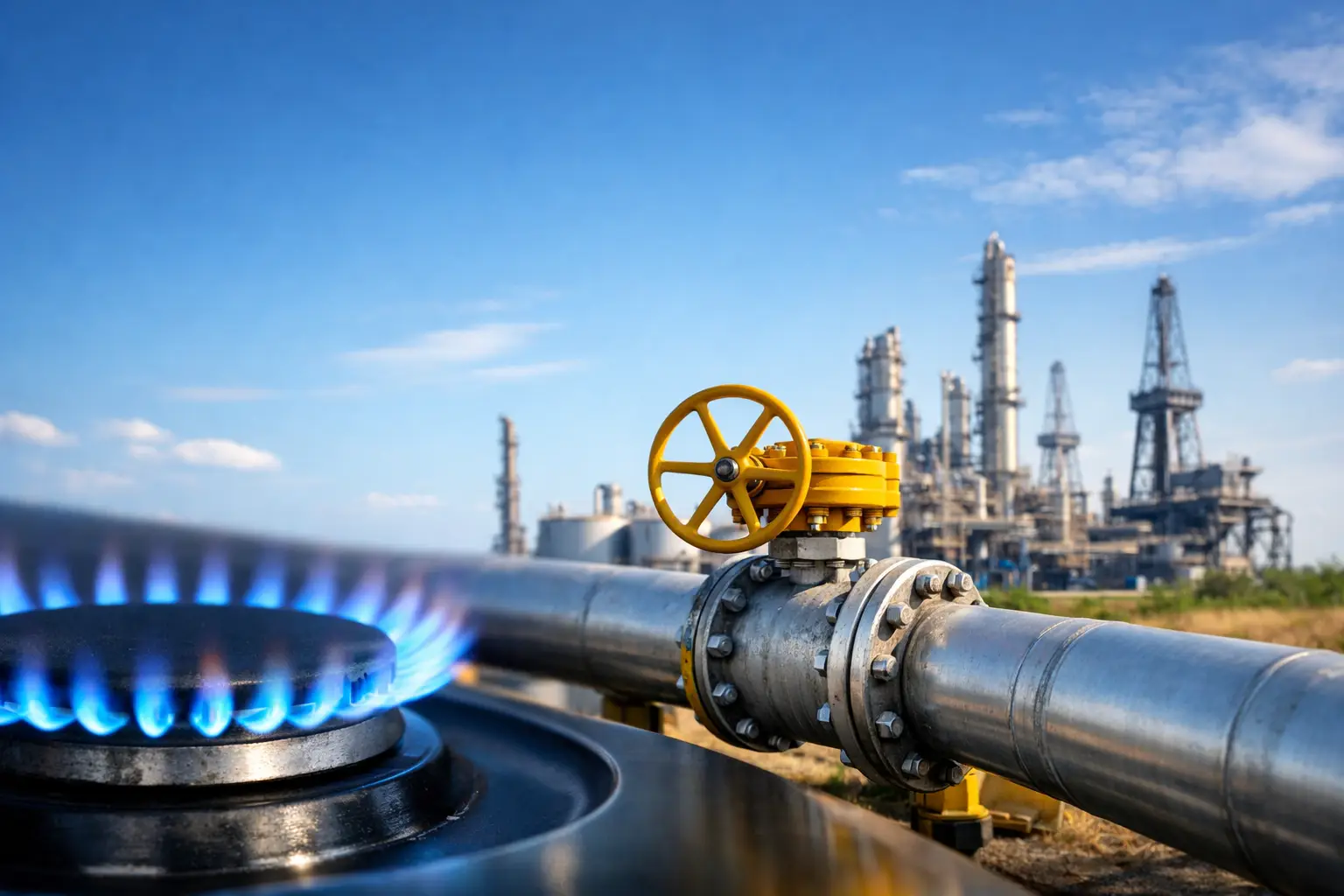
Learn what is natural gas and how does it work, from supply lines to appliances, plus key safety and service facts for homes and businesses.
If you use a gas stove, water heater, furnace, dryer, or commercial kitchen equipment, you rely on a fuel source that does a lot of work behind the scenes. Many property owners ask, what is natural gas and how does it work, especially when planning a new installation or upgrading an existing system. The short answer is that natural gas is a combustible fuel delivered through a utility pipeline system and used by properly connected appliances to create heat, hot water, or flame.
For most homeowners and business owners, that answer is only the beginning. What matters in practice is how the gas gets to your property, how it is controlled, and why proper installation matters so much for safety and reliability.
Natural gas is a fossil fuel made mostly of methane. It forms underground over long periods of time and is extracted, processed, and distributed through large pipeline networks. Once it reaches a home or commercial building, it flows through a gas service line, passes through a meter and regulator, and then moves through the property’s gas piping system to fuel specific appliances.
What makes natural gas useful is its ability to burn cleanly and efficiently when mixed with air and ignited in a controlled way. That controlled combustion creates energy in the form of heat. Your water heater uses that heat to warm water. A gas range uses it for cooking. A furnace uses it to warm indoor air. In a commercial setting, natural gas may power kitchen lines, water heating systems, or other equipment that needs dependable heat output.
The system sounds simple, but every part has to work correctly. Pressure must be regulated. Piping must be properly sized. Connections must be secure. Venting must be handled correctly where required. That is why natural gas service is a specialized trade, not a general handyman task.
Natural gas starts far away from the property where it is ultimately used. After it is extracted from underground formations, it is processed to remove impurities and separated into usable components. Utility companies then send it through transmission and distribution systems until it reaches neighborhoods and commercial areas.
By the time it arrives at a property, the gas has been prepared for safe delivery and practical use. An odorant is added so leaks are easier to detect. In its natural state, gas is odorless, so the familiar sulfur-like smell is a safety measure, not a natural feature of the fuel itself.
That detail matters because many customers assume they would always notice a problem immediately. Sometimes they do, sometimes they do not. Appliance location, airflow, and building layout can all affect how quickly a gas issue becomes obvious.
Once natural gas reaches your building, it does not simply flow at random to any appliance that needs it. The system is controlled at several points.
The gas first enters through the service connection from the utility. It then passes through a meter, which tracks usage, and a regulator, which reduces pressure to a level appropriate for the building’s internal piping and connected equipment. From there, the gas travels through installed pipe lines to each approved appliance.
Each appliance is designed to receive a specific amount of gas at a specific pressure range. If the piping is undersized, poorly routed, damaged, or not matched to the equipment load, performance can suffer. In more serious cases, safety can be compromised.
This is one reason gas work requires planning rather than guesswork. Adding a new tankless water heater, range, generator connection, or commercial appliance line is not just about attaching a pipe. The system has to be evaluated as a whole.
To understand how natural gas works, it helps to look at what happens inside the appliance. Gas enters the unit through a control valve. The appliance releases the correct amount of fuel and mixes it with air. An ignition source then lights that mixture, creating a controlled flame.
That flame generates heat, and the appliance is built to put that heat to work in a specific way. A stove transfers heat to cookware. A dryer heats air to dry clothing. A water heater transfers heat to stored or flowing water. A furnace heats air that is distributed through ductwork.
Different appliances use different ignition methods and safety controls. Some use pilot lights, while many newer systems use electronic ignition. Commercial equipment may also include additional shutoff, monitoring, and ventilation requirements depending on the application.
The key point is that the appliance does not create energy on its own. It converts the chemical energy stored in natural gas into usable heat through controlled combustion.
Natural gas remains a common choice because it offers steady performance and broad appliance compatibility. For many properties, it supports cooking, water heating, space heating, and specialty equipment through one connected fuel source.
It is also valued for convenience. Unlike fuels that require on-site delivery and storage, utility-supplied natural gas is generally available through a continuous line. That makes it especially attractive for occupied homes, apartment properties, restaurants, and other businesses that need dependable daily operation.
That said, natural gas is not a one-size-fits-all answer. Appliance demand, building design, existing infrastructure, and local utility access all play a role in whether a gas installation is straightforward or more involved. In some cases, a property may need pipe upgrades, capacity checks, or code-related corrections before new equipment can be safely connected.
A lot of people hear the words natural gas and think only about risk. The more accurate view is that natural gas is safe when the system is properly designed, installed, and maintained.
Problems tend to happen when piping is damaged, connections fail, appliances are improperly installed, ventilation is inadequate, or previous work was done without the right level of expertise. Gas systems depend on exact workmanship. Small errors can create serious consequences.
That is why licensed gas professionals focus so heavily on sizing, pressure testing, shutoff access, code compliance, and appliance compatibility. Safety is not one feature added at the end of a project. It is built into every decision from the first inspection to the final connection.
If you ever smell gas, hear hissing near a gas line, or suspect a leak, the right response is immediate professional attention. Gas concerns are not something to delay or take lightly.
This is where many property owners run into confusion. They assume that if gas already serves one appliance, adding another is simple. Sometimes it is. Sometimes it is not.
A new appliance changes the load demand on the system. The existing gas line may be sufficient, or it may need to be extended, resized, or reconfigured. The appliance itself must also be compatible with the fuel source and connected according to manufacturer and code requirements.
For example, adding a gas range in a kitchen remodel is different from installing gas service for a commercial cooking line. A pool heater, generator connection, or tankless water heater may require a more detailed review of line capacity and routing. The same is true in older properties where piping may not match current demands or standards.
For customers in Miami and surrounding areas, this is especially important in renovation-heavy properties, mixed-use spaces, and commercial environments where system demands can change over time.
Natural gas systems are dependable when they are handled correctly. That starts with understanding the full picture – the utility connection, the meter, the regulator, the interior piping, the appliance load, and the code requirements that apply to the project.
A specialized gas contractor does more than connect equipment. They help identify whether the system can support the intended use, whether the line sizing is appropriate, and whether the installation will perform safely over time. For homeowners, that means peace of mind. For property managers and businesses, it means fewer surprises and a more reliable system.
At Prestige Gas Services Corp, that approach is central to every project. Customers are not looking for a vague answer or a rushed installation. They want clear guidance, dependable work, and a provider who treats gas safety with the seriousness it deserves.
Natural gas works by delivering controlled fuel to the right appliance, at the right pressure, through the right piping system. When those parts come together correctly, it is one of the most practical and reliable energy sources a property can use. If you are planning a new gas installation or evaluating an existing setup, the smartest next step is to make sure the system is reviewed with safety and long-term performance in mind.
In this article
Discuss Your Gas Project
Contact Prestige Gas Services for natural gas and propane service in Miami-Dade and Broward counties. Request a free estimate.