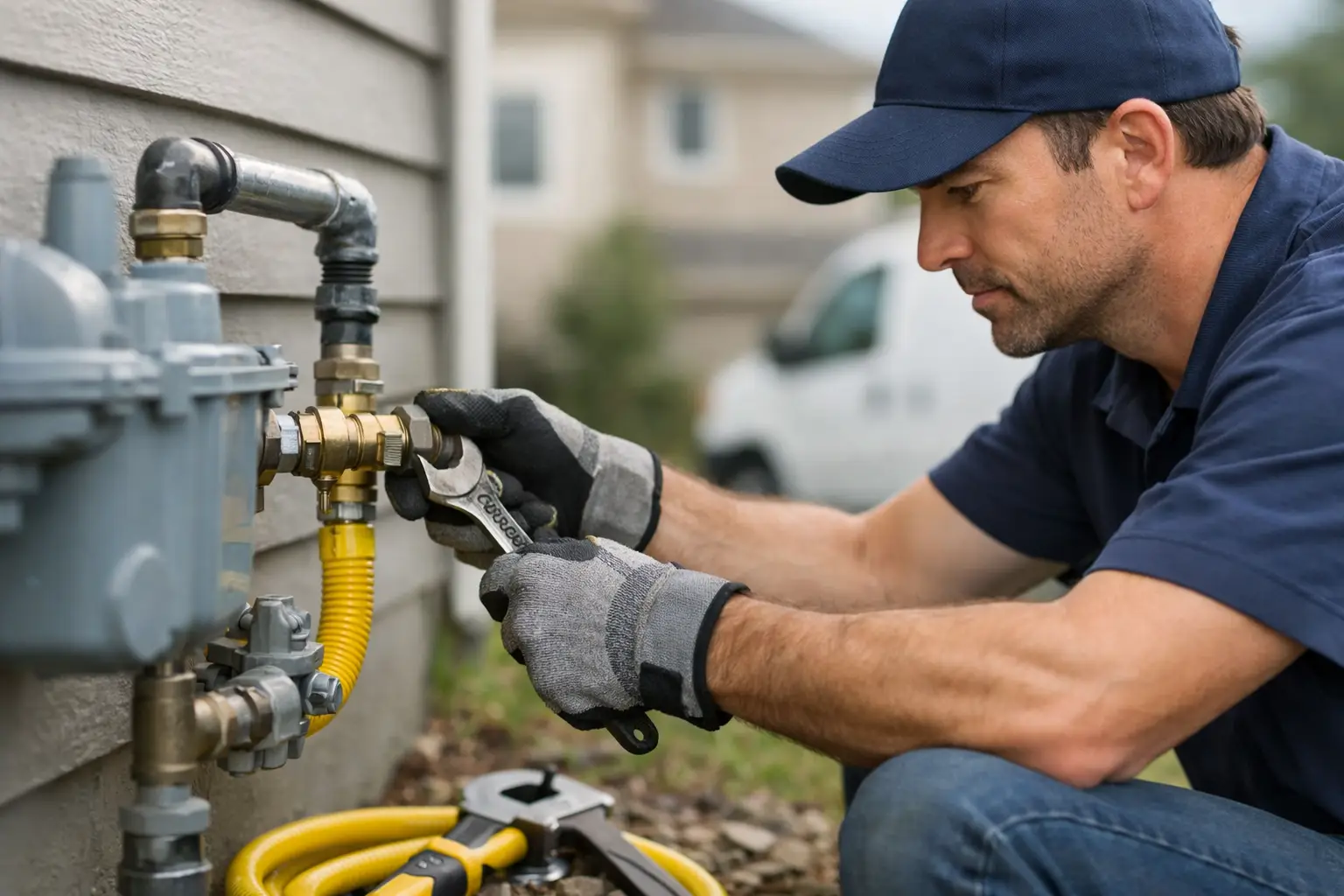
Wondering who installs gas lines for homes? Learn which licensed professionals handle gas line work, permits, inspections, and safe installation.
If you are planning a new gas stove, water heater, dryer, fireplace, or outdoor appliance, one question comes up fast: who installs gas lines for homes? The short answer is a licensed gas plumber or a qualified contractor who is authorized to perform residential gas line work under local code. Because gas piping affects safety, permits, inspections, and appliance performance, this is not a job for a general handyman.
For homeowners, the bigger issue is not just who can do it, but who should do it. Gas line installation needs to be done correctly the first time, with the right pipe sizing, proper materials, code-compliant routing, pressure testing, and coordination with the utility or inspection process when required. That is why many property owners look for a company that focuses specifically on gas services rather than treating gas work as a side offering.
In most residential projects, gas lines are installed by licensed plumbers with gas experience, licensed gas contractors, or specialty gas service companies that handle natural gas piping and related work. The exact license classification can vary by state and local jurisdiction, which is why credentials should always be verified based on where the property is located.
What matters most is that the contractor is legally permitted to perform gas piping work in your area and has direct experience with residential installations. A company may be excellent at general plumbing but still not be the best fit for a gas range extension, pool heater hookup, generator line, or a full property gas system upgrade. Gas work is specialized, and experience shows up in the details.
A qualified installer should understand appliance demand, regulator requirements, shutoff valve placement, venting coordination where applicable, and the inspection steps needed to bring a system online safely. They should also be able to explain the scope in plain language, which helps reduce confusion for homeowners who do not deal with gas infrastructure every day.
Natural gas and propane systems are not forgiving of shortcuts. Even a small installation mistake can create a serious issue, whether that means a leak, poor appliance performance, pressure problems, or a failed inspection that delays your project.
That is why the answer to who installs gas lines for homes is tied so closely to licensing and specialization. A licensed professional is expected to follow code, use approved materials, perform proper testing, and complete the work in a way that supports safe operation over time. They also know when a project needs permit coordination and when an existing gas setup needs to be evaluated before anything new is added.
There is also a practical reason to hire a specialist. Many homes were not originally designed for the gas load owners want later. Adding a tankless water heater, standby generator, fire pit, and new kitchen appliance may require more than just running a new branch line. The system may need resizing or reconfiguration. A trained gas professional can catch that early.
People often assume any plumber can install any gas line. Sometimes that is true, but not always. Gas plumbing is a specific area within the trade. It involves fuel gas codes, combustion appliance considerations, pressure testing procedures, and a higher level of risk management.
That distinction matters when you are hiring. If a contractor mainly handles drains, fixtures, and water lines, gas installation may not be their strongest area. If your project involves a new appliance connection, a line extension, a meter upgrade discussion, or a larger residential gas improvement, it makes sense to work with a provider that does this type of work regularly.
A proper residential gas line installation starts with an assessment of the home, the appliances involved, and the available gas service. That includes reviewing where the new line needs to run, what load the appliance requires, and whether the current system can support the addition.
From there, the installer determines the right materials and line size, plans a code-compliant route, and handles the required installation steps. Depending on the project, this may include shutoff valves, sediment traps, regulators, appliance connectors, protective sleeving, and other components required by code or manufacturer instructions.
Testing is a major part of the job. A qualified installer does not simply connect the line and leave. The system must be checked for leaks and verified before the appliance is placed into operation. If permits or inspections are part of the project, those steps need to be built into the schedule as well.
For homeowners in Miami and surrounding areas, local conditions can also affect the work. Building types, municipal requirements, and project scope can all influence the installation process. That is another reason local experience matters.
You do not need to know every technical detail to hire well. You do need to know what separates a dependable gas line installer from someone who is guessing. The right company should be clear about licensing, willing to explain the process, and comfortable discussing permits, testing, and code compliance.
They should also ask good questions. What appliance is being installed? Is this natural gas or propane? Is there an existing line nearby? Has the gas load been reviewed? Will inspection be required? A serious professional does not rush past those details.
Communication matters too. Gas projects can make homeowners uneasy, especially if they are adding a new line for the first time. A good installer explains what is happening, what the timeline looks like, and what conditions might affect the job. That straightforward approach builds trust and usually leads to a smoother project.
A few questions can tell you a lot. Ask whether the company is licensed for residential gas line work in your area. Ask whether they handle permits and inspections when needed. Ask whether they routinely install lines for the type of appliance you are adding.
You can also ask how they verify the line is properly sized and how the system is tested before use. You are not looking for complicated jargon. You are looking for clear, confident answers that show the company treats gas work seriously.
Some gas line jobs are straightforward, and some are not. Replacing an existing appliance in the same location may be relatively simple if the line is already correct and in good condition. Installing a new appliance in a different part of the house is often more involved.
The complexity goes up when multiple appliances are being added, the home has an older gas system, or the new equipment has a higher demand than the current piping can support. Outdoor kitchens, pool heaters, generators, and whole-home upgrades often require more planning than homeowners expect.
This is where experience pays off. A specialist can identify issues before installation begins instead of discovering them halfway through the project. That saves time, reduces disruption, and helps avoid rework.
When permits are required, the installer is typically the licensed contractor performing the work. They submit documentation, follow the approved scope, and coordinate inspection steps so the installation can be verified under local code. Homeowners should not have to guess their way through that process.
This part of the job is easy to overlook, but it matters. Permitting and inspection are not just paperwork. They are part of making sure the gas line is installed safely and legally. A company that handles these steps routinely is usually better prepared for the full project, not just the physical piping.
For customers who want a simpler experience, working with a dedicated gas service company can be the easiest path. Instead of piecing together help from multiple providers, you are dealing with one team that understands the work from planning through completion. That is the approach companies like Prestige Gas Services Corp are built around.
Choosing the right installer comes down to safety, qualifications, and confidence in the process. If you are asking who installs gas lines for homes, the best answer is a licensed gas professional with real residential experience, a clear understanding of code, and a service approach that keeps you informed from start to finish. When gas work is handled carefully, your appliances run the way they should and your home is better prepared for dependable use.
In this article
Discuss Your Gas Project
Contact Prestige Gas Services for natural gas and propane service in Miami-Dade and Broward counties. Request a free estimate.